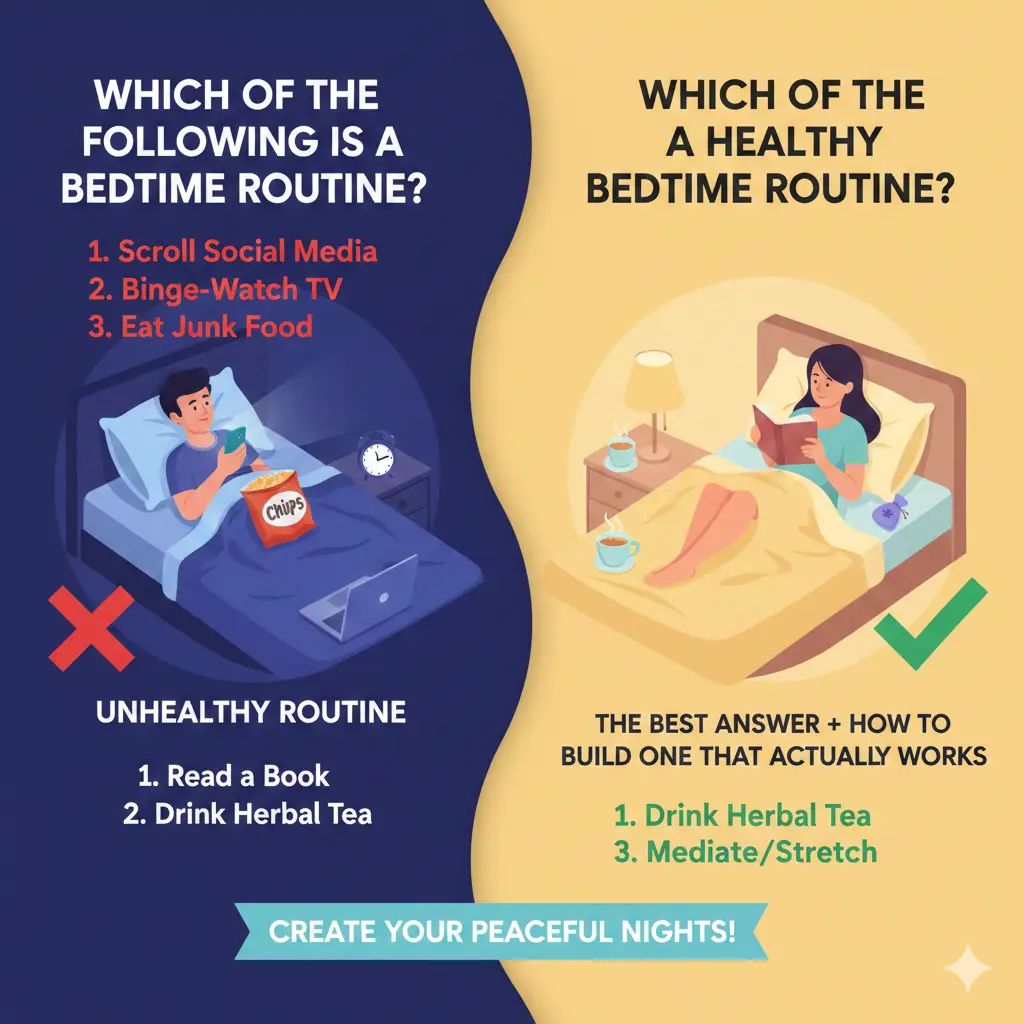
Which of the Following Is a Healthy Bedtime Routine? The Best Answer + How to Build One That Actually Works
Do you ever lie in bed scrolling or worrying about tomorrow while the clock keeps ticking? You’re not alone. Millions of working adults and students struggle with poor sleep because their evenings are chaotic. The good news? A simple bedtime routine for adults can fix that. In fact, the question “which of the following is a healthy bedtime routine1” appears on quizzes and health sites because people want quick, clear answers.
Let’s settle it right now.
Here are the common multiple-choice options you’ve probably seen:
a. Eat a large meal → get into bed → read for 30 minutes
b. Take a bath → get into bed → discuss monthly budget and bills
c. Take a bath → read for 30 minutes → get into bed
d. Read for 30 minutes → get into bed → watch TV for an hour
The correct and healthiest choice is C.
Why? It avoids heavy food, stressful talks, and blue light right before sleep — the three biggest sleep killers according to Harvard Health and the Sleep Foundation. Option C calmly winds you down and signals your brain: “Time to rest.”
Now let’s go deeper and show you exactly how to create your own healthy bedtime routine that fits a busy life, even if you work late, study, or have an irregular schedule.
Why a Consistent Bedtime Routine Matters More Than You Think
Adults need 7–9 hours of sleep every night. Yet CDC data shows over 35% of adults in Tier 1 and Tier 2 countries get less than 7 hours. The result? Tired days, weak focus, low mood, and a higher risk of weight gain and illness.
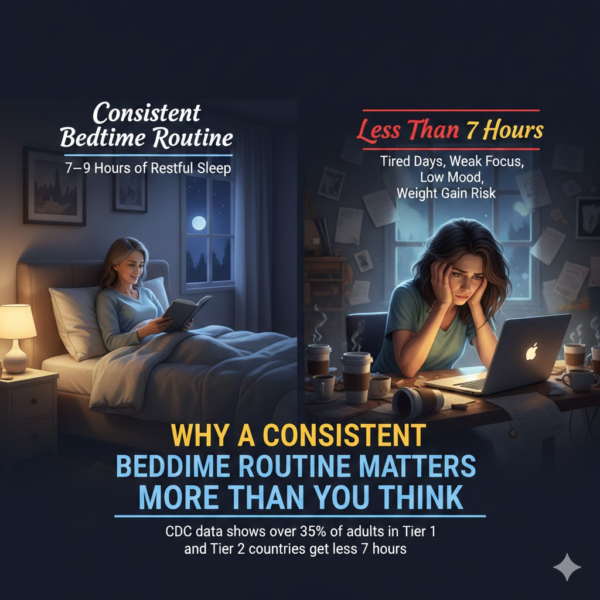
A solid nighttime routine protects your circadian rhythm2 (your body’s 24-hour clock). When you follow the same relaxing steps every evening, your brain starts releasing melatonin naturally, and you fall asleep 15–30 minutes faster.
The 8 Science-Backed Steps of a Healthy Bedtime Routine for Adults
Follow this exact order for the best results. Pick and choose what fits your life — even doing 4–5 of these will help.
1. Set a Fixed “Wind-Down” Time (Start 60–90 Minutes Before Bed)
Decide on your bedtime and count backward. Example:
→ Want to sleep at 11:00 p.m.? Start winding down at 9:30–10:00 p.m.
Put a reminder on your phone called “Sleep Mode Starts.”
2. Dim the Lights + Switch to Warm Lighting
Bright light tricks your brain into thinking it’s daytime.
→ Use lamps with warm bulbs (2700K or “soft white”).
→ Turn overhead lights off.
Research from Harvard shows dim, warm light boosts melatonin by up to 70%.
3. No Heavy Meals or Caffeine After 7 p.m.
Large meals raise body temperature and trigger digestion — both keep you awake.
Caffeine can stay in your system for 8+ hours.
Safe evening snacks (if hungry): banana, almonds, cherry juice, or a small bowl of oatmeal.
4. Limit Screen Time at Night (The 20-20 Rule)
Blue light from phones and laptops blocks melatonin.
→ 60 minutes before bed: no screens if possible.
→ If you must use devices → wear blue-light blocking glasses + turn on Night Shift / Dark Mode.
→ Better yet: keep phones outside the bedroom.
5. Take a Warm Bath or Shower
A warm bath 60–90 minutes before bed drops your core temperature afterward — the exact signal your body uses to fall asleep.
Add Epsom salt or lavender oil for extra relaxation.
6. Practice Relaxation Techniques Before Sleep
Choose one (or rotate):
- Bedtime meditation (5–10 min apps like Calm or free YouTube guides)
- Deep breathing: 4 seconds in, 7 seconds hold, 8 seconds out (4-7-8 method)
- Light bedtime stretching or yoga (Child’s pose, legs-up-the-wall)
- Gratitude journaling: write 3 things that went well today
7. Read a Physical Book or Listen to Calm Audio
Reading a paper book for 20–30 minutes is perfect.
Avoid thrilling novels — choose something light or boring!
Audiobooks or sleep stories work too (low volume, timer on).
8. Create a Sleep-Friendly Bedroom
Cool (16–20°C / 60–68°F), dark, and quiet is best.
Must-haves:
- Blackout curtains
- Comfortable mattress and pillows
- A white/pink noise machine if you live in a noisy area
- No TV in the bedroom (ever!)
Sample 60-Minute Healthy Bedtime Routine (Customizable)
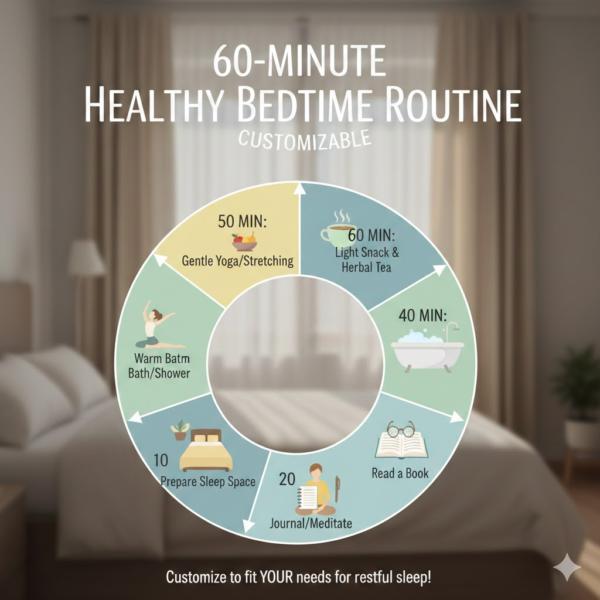
10:00 p.m. → Lights dim + phone on Do Not Disturb
10:05 p.m. → Warm shower with lavender soap
10:20 p.m. → Light stretching or 4-7-8 breathing
10:30 p.m. → Read a paper book in bed (warm lamp only)
11:00 p.m. → Lights off → asleep within 15 minutes
Even if your schedule changes on weekends, try to keep bedtime within a 1-hour window to protect your sleep-wake cycle.
Common Mistakes That Destroy Sleep (Avoid These!)
- Eating spicy or large meals late
- Arguing or paying bills in bed
- Doom-scrolling social media
- Drinking alcohol (“nightcap” actually fragments sleep)
- Exercising intensely after 8 p.m.
- Napping longer than 20–30 minutes in the afternoon
How Long Until You Feel the Difference?
Most adults notice they fall asleep faster within 3–7 days.
Deeper, more refreshing sleep usually kicks in after 2–4 weeks of consistency.
Quick Bedtime Routine Checklist
Same bedtime ±1 hour every day
No caffeine after 2–3 p.m.
Screens off 60 min before bed
The room is cool, dark, quiet
Warm bath/shower
10–20 min reading or meditation
Gratitude or light journaling
Lights out!
FAQs
Which of the following is a healthy bedtime routine again?
The winner is Option C! Take a warm bath → read a real paper book for 30 minutes → hop into bed. This one is perfect because it skips food, worry, and bright screens that keep your brain awake.
I work night shifts. Can I still have a bedtime routine?
Yes, 100 % yes! Just make a “wind-down” step that you do every single time before you sleep — even if it’s morning. Use blackout curtains, earplugs, a cool room, and the same calm things (bath, book, soft music) so your body knows “okay, sleep time now.”
How can I stick to it when I’m super tired and just want to crash?
Start super super small so it feels easy and nice, not hard. Just dim the lights and read (or listen to) 5–10 pages, that’s it. After a few nights, your brain starts to love it, and soon the whole routine feels like a cozy treat instead of work. Small wins make big habits!
Conclusion
The question “which of the following is a healthy bedtime routine3” has a clear winner: the calm, screen-free, stress-free sequence (Option C). But the real magic happens when you turn those ideas into your own simple bedtime routine for better sleep.
Pick 3–4 steps from this guide, do them tonight, and keep them for 14 days, and you’ll wake up feeling like a new person, sharper at work or school, happier, and full of energy.
You deserve great sleep. Start small, stay consistent, and watch your days transform.
What’s the very first change you’ll make to your evening tonight? Drop it in the comments — let’s keep each other accountable!
See Also
- Mommy and Me Outfits: 50+ Cute Matching Looks Moms and Kids Love in 2025
- Dad Jokes For Kids: 100+ Clean and Funny Puns That Make Everyone Laugh
- 38 Heartwarming Sunday Dinner Ideas That Make Weekends Feel Like Home