What Happens If You Leave Conditioner in Your Hair: Benefits, Risks, and Tips
Have you ever rushed through your shower and wondered what happens if you leave conditioner in your hair? Many people do this by accident or on purpose. They hope for softer strands or quicker routines. This simple act can change your hair’s health in good or bad ways. We will explore the facts behind it. You will learn about moisture boosts, possible issues like greasiness, and how to do it right. Whether you use conditioner every day or try new products, this guide helps you make smart choices for your hair.
Understanding Hair Conditioner Basics
Hair conditioner smooths and hydrates your locks after shampoo strips away natural oils. It coats the hair shaft to seal in moisture and protect against damage. Most people rinse it out, but some leave it in for extra benefits. Let’s break down how it works.
Conditioners contain ingredients like emollients, which soften hair, and humectants that draw in water. They also have proteins to strengthen strands. When you apply conditioner, it fills in gaps in the hair cuticle. This makes your hair shiny and easy to comb. But leaving it in changes the game.
Think about your hair like a sponge. Shampoo cleans it, but conditioner soaks it with goodness. If you rinse too soon, you might miss out on full hydration. Yet, too much time without rinsing can overload the sponge, leading to problems.
Types of Hair Conditioners Explained
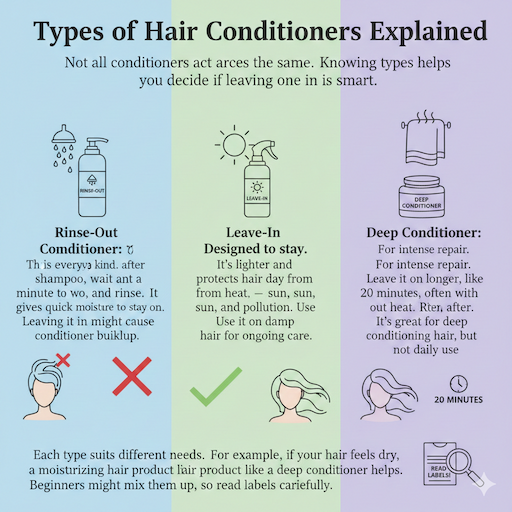
Not all conditioners act the same. Knowing the types helps you decide if leaving one in is smart.
- Rinse-Out Conditioner: This is the everyday kind. You apply it after shampoo, wait a minute or two, and rinse. It gives quick moisture but isn’t made to stay on. Leaving it in might cause conditioner buildup.
- Leave-In Conditioner: Designed to stay. It’s lighter and protects hair all day from heat, sun, and pollution. Use it on damp hair for ongoing care.
- Deep Conditioner: For intense repair. Leave it on longer, like 20 minutes, often with heat. Rinse it out after. It’s great for deep conditioning hair, but not for daily use.
Each type suits different needs. For example, if your hair feels dry, a moisturizing hair product like a deep conditioner helps. Beginners might mix them up, so read labels carefully.
What Happens If You Leave Conditioner in Your Hair? The Short-Term Effects
When you skip rinsing, conditioner keeps working on your strands. In the short term, this can mean more moisture soaking in. Your hair might feel softer right away. It could also detangle more easily, saving time on brushing.
But watch out. The extra product can weigh down fine hair, making it look flat. For curly hair, it might define waves better. These effects depend on your hair type and the conditioner’s formula.
One study from the Journal of Cosmetic Science in 2019 found that prolonged conditioner exposure can attract up to 30% more pollutants to hair. This happens because the coating acts like a magnet for dirt. So, while your hair gains hydration, it might collect grime faster.
Long-Term Impacts on Hair Health
Over time, leaving conditioner in regularly affects your locks deeply. Positive sides include better hair hydration and fewer split ends. The constant moisture barrier shields against daily wear.
On the flip side, risks build up. Conditioner buildup clogs hair follicles, leading to scalp issues. Your hair might turn dull or break more easily. This is called hygral fatigue, where strands swell and shrink too much from water.
Balance is key. Use protein vs moisture balance to keep hair strong. Too much moisture without protein makes hair mushy. Test your strands: Stretch a wet hair 30%. If it snaps or doesn’t bounce back, adjust your routine.
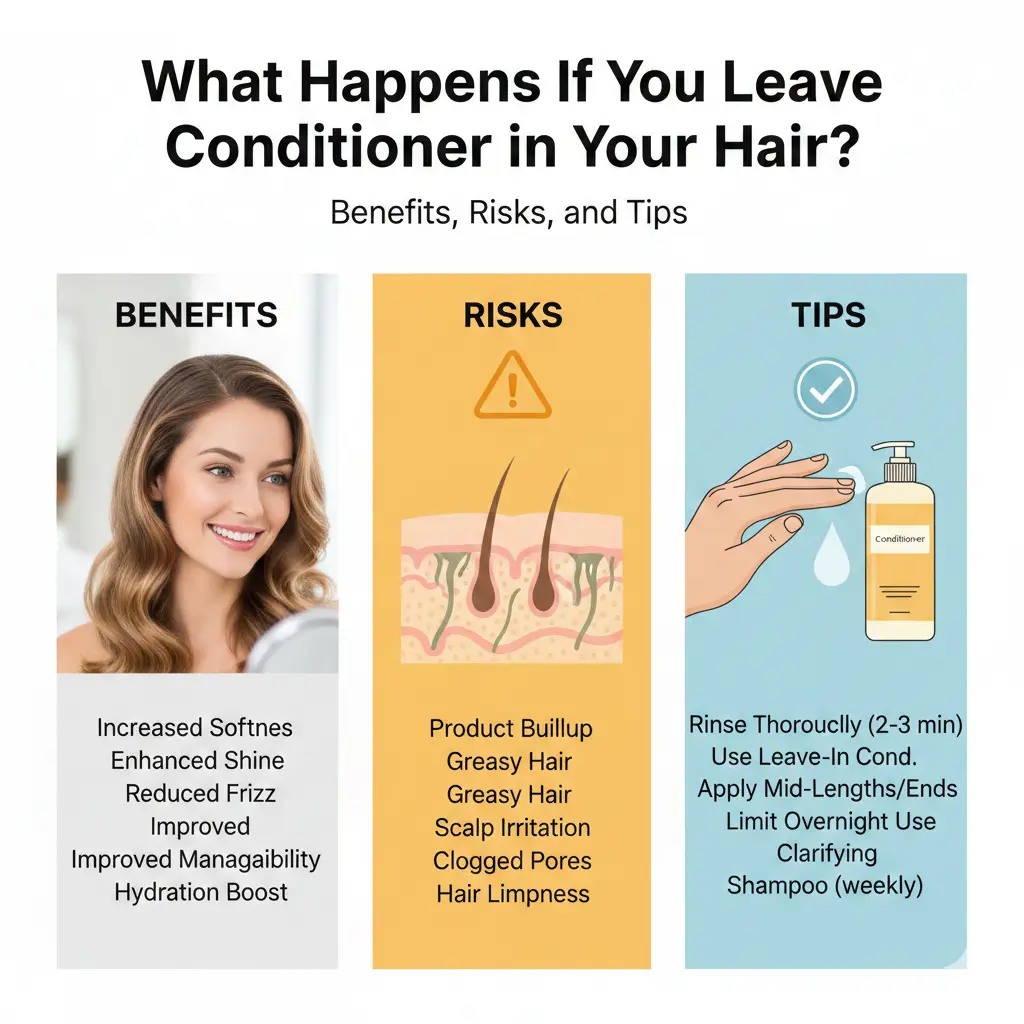
Benefits of Leaving Conditioner in Your Hair
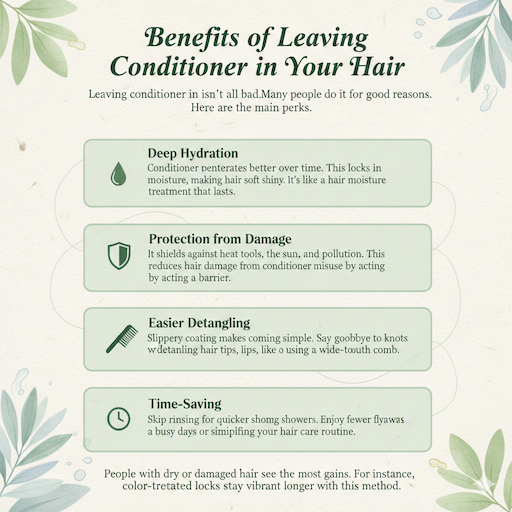
Leaving conditioner in isn’t all bad. Many people do it for good reasons. Here are the main perks.
- Deep Hydration: Conditioner penetrates better over time. This locks in moisture, making hair soft and shiny. It’s like a hair moisture treatment that lasts.
- Protection from Damage: It shields against heat tools, the sun, and pollution. This reduces hair damage from conditioner misuse by acting as a barrier.
- Easier Detangling: Slippery coating makes combing simple. Say goodbye to knots with detangling hair tips, like using a wide-tooth comb.
- Frizz Control: For frizzy hair, it smooths the cuticle. Enjoy fewer flyaways and more manageability.
- Time-Saving: Skip rinsing for quicker showers. Ideal for busy days or simplifying your hair care routine.
People with dry or damaged hair see the most gains. For instance, color-treated locks stay vibrant longer with this method.
Risks and Downsides to Watch For
While benefits exist, risks are real. Don’t ignore them to avoid hair woes.
- Greasy Hair: Excess product makes roots oily. This leads to a limp look and more washing, which dries hair out.
- Scalp Irritation: Buildup clogs pores, causing itchiness or flakes. Follow scalp care tips like massaging gently.
- Breakage and Dullness: Overloaded strands weaken. They lose shine and snap easier.
- Bacterial Growth: Moist environments breed germs. This might cause infections if left overnight often.
- Altered Texture: Hair can feel sticky or heavy. Fine hair suffers most from this.
If you notice these signs, rinse more thoroughly next time. Use a clarifying shampoo weekly to clear residue.
What Happens If You Leave Conditioner in Your Hair Overnight?
Many ask about overnight conditioning. It sounds dreamy for deep repair, but results vary.
Pros include intense moisture for very dry hair. Wrap your head in a cap to boost penetration. Wake up to softer locks.
Cons? It can lead to greasy hair solutions in the morning. Pillow transfer might clog skin pores, too. Only use products labeled for overnight use.
Start with a small amount on the ends. Avoid roots to prevent oiliness. For curly hair, this method enhances definition. GK Hair’s guide on leaving conditioner in1.
Rinse-Out vs Leave-In Conditioner: Key Differences
Confused about types? Let’s compare.
Rinse-Out Conditioner:
- Heavy moisture boost.
- Rinse after 1-5 minutes.
- Best for shower use.
- Risk of buildup if left in.
Leave-In Conditioner:
- Lighter formula.
- Stays on all day.
- Protects and detangles.
- No rinse needed.
Can you use regular as a leave-in conditioner benefits? In a pinch, dilute it with water. But it’s not ideal long-term. Experts say dedicated leave-ins work better for rinse-out vs leave-in conditioner.
For fine hair, choose lightweight options. Thick hair handles richer ones.
How Hair Type Influences the Effects
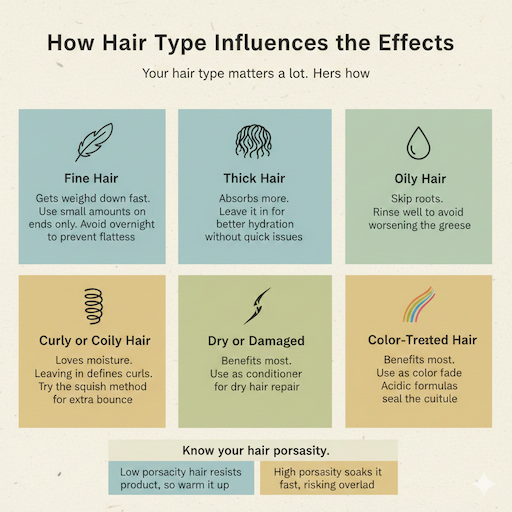
Your hair type matters a lot. Here’s how.
- Fine Hair: Gets weighed down fast. Use small amounts on ends only. Avoid overnight to prevent flatness.
- Thick Hair: Absorbs more. Leave it in for better hydration without quick issues.
- Curly or Coily Hair: Loves moisture. Leaving in defines curls2. Try the squish method for extra bounce.
- Oily Hair: Skip roots. Rinse well to avoid worsening the grease.
- Dry or Damaged Hair: Benefits most. Use as a conditioner for dry hair repair.
- Color-Treated Hair: Protects color fade. Acidic formulas seal the cuticle.
Know your hair porosity. Low porosity hair resists product, so warm it up. High porosity soaks it fast, risking overload.
Is It Bad to Leave Conditioner in Your Hair Overnight? Expert Insights
Experts warn against it for rinse-out types. It causes hair damage from conditioner, like weakness.
But for deep treatments, it’s okay weekly. A 2019 study showed that overnight masks restore moisture in damaged hair effectively.
Listen to your hair. If it feels great, continue. If not, adjust.
Common Hair Care Mistakes Involving Conditioner
Avoid these pitfalls.
- Not Rinsing Enough: Leaves residue. Rinse until the water runs clear.
- Applying to Dry Hair: Works best on wet hair for an even spread.
- Using Too Much: A dime-sized amount is often enough. More causes build up.
- Ignoring Hair Type: Pick products that match your needs.
- Skipping Patch Tests: Check for allergies first.
Fix mistakes with natural remedies to fix conditioner buildup, like apple cider vinegar rinses.
Tips for Safely Leaving Conditioner in Your Hair
Want to try it? Follow these steps.
- Choose the Right Product: Opt for leave-ins or dilutes.
- Apply Sparingly: Start at mid-lengths.
- Use on Damp Hair: After toweling dry.
- Protect Overnight: With a silk cap.
- Rinse if Needed: Next day for balance.
For how long should you leave conditioner in your hair: 5 minutes for rinse-out, all day for leave-in.
What Happens If You Use Regular Conditioner as a Leave-In?
It’s tempting to swap, but proceed with care.
Regular ones are heavier, leading to weight and dullness. Dilute 1:1 with water in a spray. Apply lightly.
Better yet, buy a true leave-in for the best leave-in conditioners for dry or frizzy hair.
Preventing and Fixing Conditioner Buildup
Buildup happens when product layers up. Signs: Dull, heavy hair.
Prevent with weekly clarifying washes. Use lightweight formulas.
Fix by:
- Shampoo twice.
- Vinegar rinse (1:3 water).
- Baking soda scrub (gently).
This keeps how to avoid hair buildup from conditioner in check.
The Role of Hair Porosity in Conditioner Use
Hair porosity determines how well strands absorb moisture.
- Low: Slow absorption. Warm conditioner helps.
- Medium: Balanced. Standard use works.
- High: Quick soak. Avoid excess to prevent damage.
Test: Float a strand in water. Sinks fast? High porosity.
Balancing Protein and Moisture in Your Routine
Hair needs both protein and moisture to stay healthy. Protein makes hair strong. Moisture keeps it soft and flexible. If you have too much moisture, your hair feels mushy and stretchy. Add a protein treatment to fix that. If hair is dry and brittle, it needs more moisture. Signs of imbalance include stretchy hair that needs protein or brittle hair that needs moisture. Alternate between protein products and moisture products. This helps keep the balance right. Healthy hair bounces back and shines.
Effects on Scalp Health
Don’t forget your scalp. It is the base for good hair. Leaving conditioner on roots can cause irritation. Apply conditioner only from mid-lengths to ends. Massage your scalp gently with oils like jojoba or tea tree. This boosts blood flow and health. If your scalp gets itchy or red, switch to a soothing shampoo with aloe or chamomile. Keep your scalp clean and happy for strong hair growth.
Can Conditioner Damage Your Scalp If Left In?
Yes, it can if you leave it in too long. Conditioner buildup clogs hair follicles. This blocks pores and causes inflammation. Hair may get weak or fall out more. Rinse conditioner well every time. Use non-comedogenic products. These do not clog pores. Choose light formulas for your scalp. Always wash off regular conditioner. This keeps your scalp safe and healthy.
Incorporating Conditioner into Your Daily Routine
Build a simple hair care routine. Shampoo your hair 2-3 times a week. This cleans without stripping oils. Condition every wash to add softness. Use leave-in conditioner as needed for extra hydration. Do a deep treatment once a month for repair. Add serums or oils for shine and softness. Layer products lightly. Start with shampoo, then conditioner, then serum. This routine makes hair smooth and strong every day.
For Beginners: Learning Hair Care Terminology
New to hair care? It’s easy to learn. Rinse-out conditioner means you wash it off after a few minutes. Leave-in conditioner stays in your hair all day. Start simple: shampoo, apply conditioner, rinse well. This basic step makes hair soft. Experiment slowly with new products. Watch how your hair feels. Safe tries help you find what works best. Soon, you’ll know the terms and love your routine. Vegamour’s blog3.
Leave-In Conditioner vs Rinse-Out Conditioner for Fine Hair
Fine hair gets heavy fast. It prefers rinse-out conditioner. This adds moisture without weight. Rinse it out fully to keep volume. For leave-in, pick ultra-light versions only. They hydrate without making hair flat. Avoid thick creams on fine hair. Test a small amount first. Light products keep fine hair bouncy and full.
Natural Alternatives to Commercial Conditioners
Try DIY options at home. Aloe vera gel gives great moisture. It soothes and hydrates hair. Coconut oil adds shine and softness. Mix aloe or oil with water for a leave-in spray. Shake and spritz on damp hair. These natural choices are gentle and cheap. They work well for dry or damaged hair. Use fresh ingredients for the best results. Go natural for healthy shine.
Addressing Greasy Hair from Conditioner
If conditioner makes hair greasy, apply only to the ends. Skip the roots. This avoids oil buildup. Use dry shampoo between washes to refresh. Pick oil-balancing formulas with tea tree or lemon. These control grease. Wash more if needed, but not too often. Focus on light products. Your hair will stay fresh longer.
Preventing Split Ends with Proper Conditioning
Conditioner seals the hair ends. This stops splits from forming. Leave a tiny bit on the ends after rinsing. It protects them daily. Trim hair every few months, too. This removes damaged parts. Good conditioning keeps ends smooth. Healthy ends mean longer, prettier hair.
Boosting Hair Hydration Without Risks
Hydrate hair safely. Drink lots of water each day. Use a humidifier in dry rooms. For products, layer lightly. Start with a little conditioner. Add more if needed. Avoid heavy overload. This keeps hair moist without grease. Safe hydration makes hair glow and feel great.
Frizz Control Techniques Using Conditioner
Leave-in conditioner works best for frizz. It smooths hair cuticles. Apply to damp hair with your hands. Scrunch for curls or smooth for straight. This locks in moisture. Frizz goes away. Use a light amount daily. Your hair stays calm and shiny.
Moisturizing Products for Different Hair Needs
Match products to your hair type. Dry hair loves creamy, thick conditioners. They add deep moisture. Oily hair likes gel-like or light ones. These hydrate without grease. Curly hair needs rich creams for definition. Straight hair does well with sprays. Pick what fits your needs. Happy hair feels soft and looks good.
Hair Strand Protection Strategies
Protect strands every day. Use leave-in conditioner before heat styling. It shields from damage. Keep tools under 450°F to avoid burns. Brush gently with wide combs. Avoid tight ponytails. These steps keep strands strong. Protected hair grows long and healthy.
Effects of Leaving Hair Conditioner in Wet Hair
Wet hair absorbs conditioner more. Leaving it in hydrates deeply. But it risks swelling the strands. This can cause weakness over time. Pat your hair dry first with a towel. Then apply products. This controls absorption. Safe use gives moisture without harm.
How to Choose the Best Conditioner for Your Hair
Match conditioner to your hair type. Dry hair needs rich products for hydration. Read labels for good ingredients. Avoid sulfates that strip oils. Look for natural oils or proteins. Test a new one on a small section. The best one makes hair soft and easy to manage. Societe Salons’ post.
Integrating Conditioner with Other Hair Products
Layer products in order. First shampoo to clean. Then conditioner for softness. Rinse and add serum or oil last. This seals everything in. Don’t mix too many products. Too much causes buildup. Simple layers work best. Your routine stays easy and effective.
Seasonal Hair Care Adjustments
Change with the seasons. In winter, use more moisture. Leave conditioner in longer for dryness. Add oils for protection. In summer, go lighter. Rinse well to remove sweat. Use less heavy products. Adjust for weather. Your hair stays healthy all year.
Real-Life Examples and User Stories
One person left deep conditioner on overnight. Hair felt softer the next day. But the roots got greasy. They changed to applying only on the ends. Now it’s perfect. Another with fine hair uses leave-in daily. After a week, the buildup made it flat. They switched to a light rinse-out. Hair bounced back. These stories show that trial helps find what works.
Statistics on Hair Care Habits
Many people love conditioner. Surveys show most use it often. Some leave it in sometimes for extra softness. But buildup is common if overdone. About one in four report greasy or heavy hair from products. Balance is key. Simple habits like rinsing well help most people.
Expert Quotes on the Topic
“Hydration is key, but balance prevents damage,” says hair expert Dr. Michelle Henry. Experts agree: mix protein and moisture correctly. Too much of one hurts hair. Use both for strength and softness. This keeps hair healthy and beautiful.
Combining with Skincare Routines
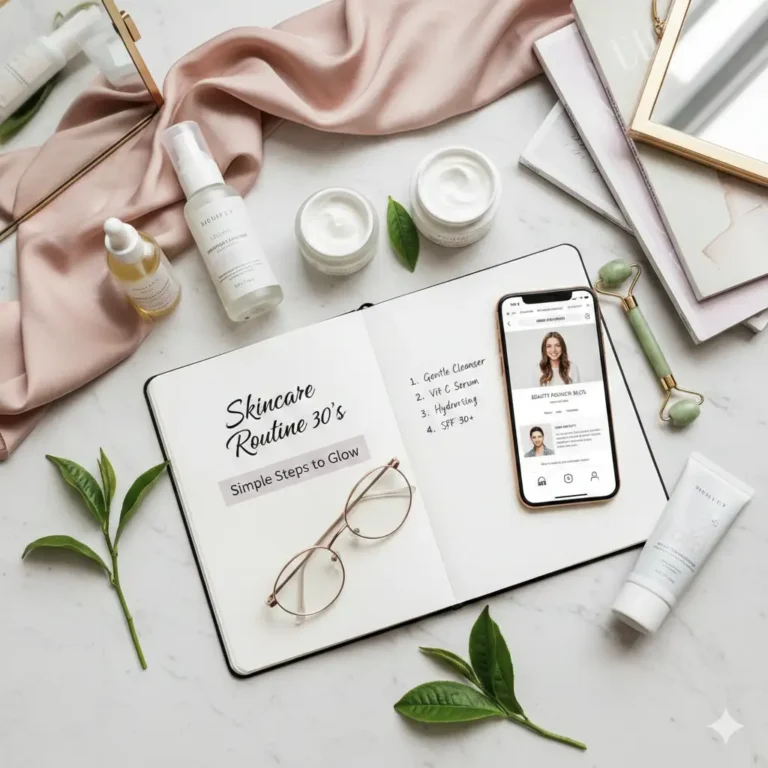
Hair and skin connect. Link to a skincare routine for 30s for overall beauty.
Or check skincare essentials that complement hair care.
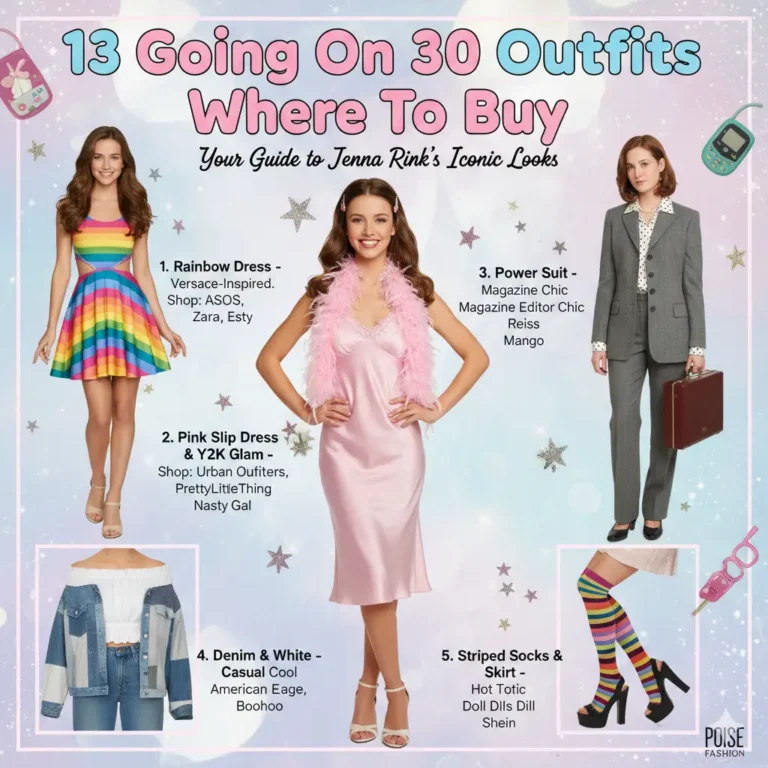
For style ideas, see the daily disguise fashion blog.
FAQs
What Happens If You Leave Conditioner in Your Hair?
Leaving regular conditioner in can make hair feel soft and moist at first. But it often causes greasy buildup and weighs hair down. Rinse it out well to keep hair light and clean.
What Happens If You Leave Deep Conditioner in Your Hair?
Deep conditioner repairs hair deeply and adds lots of moisture when left on for the right time. Leaving it too long can make hair swell and weaken. Always rinse after the time on the label.
What are hair Conditioner Tips?
Apply conditioner to mid-lengths and ends, not roots. Let it sit 2-5 minutes, then rinse with cool water for shine. Use a small amount and comb through for even softness.
Conclusion
In summary, what happens if you leave conditioner in your hair depends on the type and your hair’s needs. It offers moisture and protection, but risks buildup and irritation if done wrong. Always choose wisely and listen to your locks. What hair care question do you have next?
References
- For more on benefits and risks, check GK Hair’s guide on leaving conditioner in. ↩︎
- Explore pros and cons at Societe Salons’ post. ↩︎
- Learn if regular can sub as leave-in from Vegamour’s blog. ↩︎