How to Organize Family Chores Effectively: Simple Steps for a Happier, Cleaner Home
How to organize family chores effectively can change your home life for the better. Many families feel tired and upset when chores pile up. One person often does most of the work. This leads to fights and stress. Sharing chores fairly helps everyone feel happy and close.
Research shows that kids who do chores grow up with higher self-esteem. They become more responsible. They handle hard times better. A long Harvard study found that children who helped at home from a young age had better jobs and happier lives as adults. They learned teamwork and hard work early.
You can organize household chores with simple plans. Make lists of tasks. Assign them to family members. Use fun charts to track progress. Start with small steps. Involve even young kids. This builds good habits. Over time, chores become easy routines. Your home stays clean without big efforts.
In this guide, you will learn why chores matter. You will see real benefits backed by studies. You will get a full list of all household chores divided by daily, weekly, and monthly. Find age-appropriate ideas for kids. Learn tools like household chores template options. Get tips to make it fun and fair. By the end, you will have a clear plan to try at home.
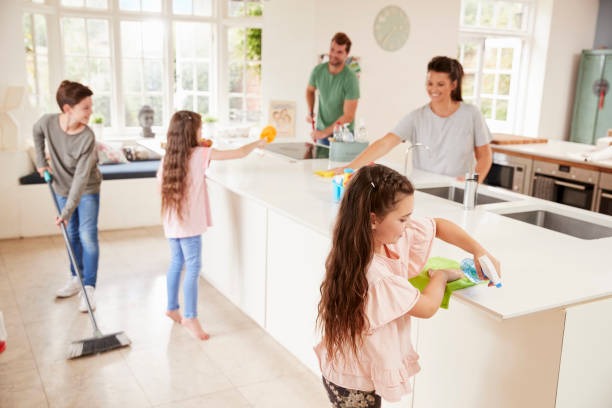
These pictures show happy families working together. Seeing everyone pitch in brings smiles and teamwork.
Why Organizing Family Chores Effectively Matters for Your Family
Homes need regular care to stay nice and healthy. Dust, dirt, and clutter can make people feel stressed. Studies from the American Psychological Association show that messy homes raise worry levels. Parents often spend many hours on tasks. One survey found parents use about 23 hours a week on chores and childcare. That is like a part-time job!
When chores are not organized, arguments happen. Kids may not help. Parents feel overloaded. But a good household management system fixes this. Everyone knows their jobs. Tasks get done faster. Families have more time for fun.
Sharing chores teaches important lessons. Kids learn to care for others. They feel proud when they help. Research from the Australian Occupational Therapy Journal says kids who do chores have better thinking skills. They plan better and control impulses.
Adults benefit too. Fair sharing reduces burnout. Moms often do more planning for chores. This “hidden work” adds stress. A balanced system helps everyone relax.
Good household management examples include family meetings. Talk about tasks weekly. Adjust as needed. This keeps things fair and smooth.
The Proven Benefits of Kids Doing Chores
Many studies show chores help children grow strong. The Harvard Grant Study followed people for over 85 years. It found that kids who did chores early were more successful later. They had better relationships and jobs.
Other research agrees. Kids with chores have higher self-esteem. They feel capable. They delay rewards better. This helps in school and life.
A study in the Journal of Developmental and Behavioral Pediatrics looked at thousands of kids. Those who helped at home had better grades. They got along with friends more. They felt happier overall.
Chores build brain skills. Tasks like sorting laundry or setting the table need planning. Kids practice memory and focus. One study showed better executive function in chore-doing kids.
Team chores teach empathy. Kids see how their actions help the family. They appreciate parents more.
Long-term wins are big. Adults who did chores as kids manage homes better. They handle money and time well.
Start young for best results. Even toddlers can pick up toys. Build slowly. Praise efforts. Kids will love helping.
For more on family teamwork, see tips on balancing work and family life.
Step-by-Step Guide: How to Organize Family Chores Effectively at Home
Ready to start? Follow these easy steps.
- Hold a Family Meeting: Gather everyone. Talk about why chores help the family. Listen to ideas. Make it positive.
- Brainstorm a Master List: Write down every task. Include big and small. Use a household chores template to guide you.
- Sort Tasks by Frequency: Group into daily, weekly, monthly. This prevents overload.
- Consider Ages and Skills: Assign based on what each person can do. Young kids get simple jobs.
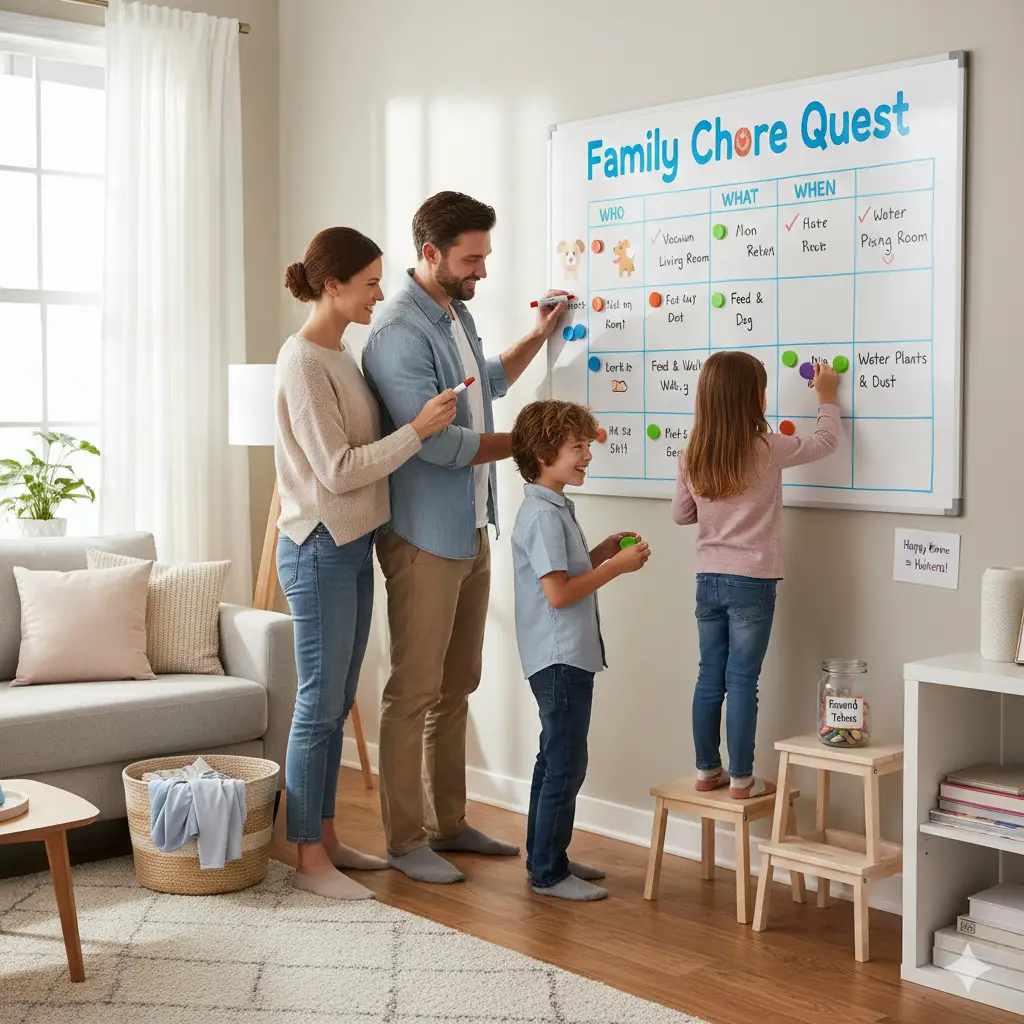
- Make It Visual: Create a chart. Post on the fridge. Use colors or stickers for fun.
- Set Clear Routines: Link chores to times. Like dishes after dinner.
- Teach and Practice: Show how first. Do it together. Then let them try alone.
- Track and Reward: Check off done tasks. Give praise or small treats.
- Review Often: Meet weekly. Change what is not working.
- Be Flexible: Adjust for sick days or busy weeks.
This plan makes how to organize family chores effectively at home simple and lasting.
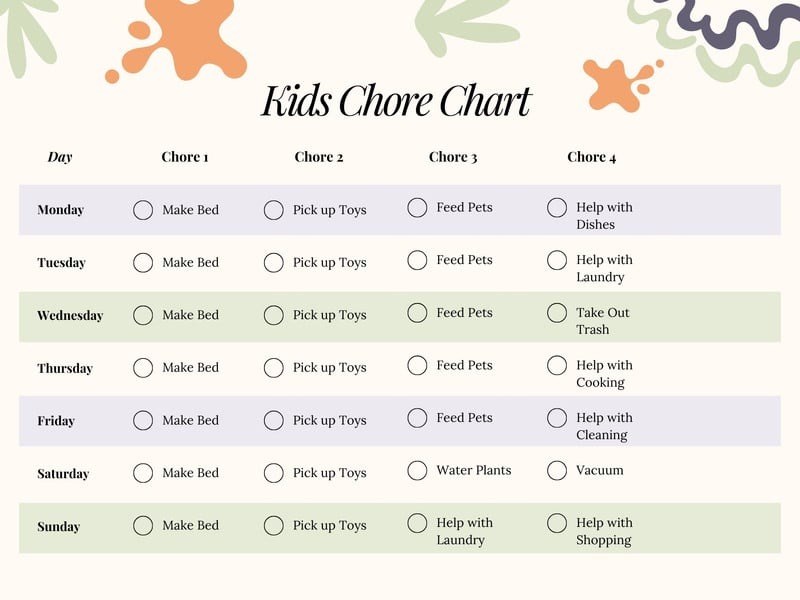
Charts like these keep everyone on track. Print one and customize it.
A Complete List of All Household Chores
Here is a full list of all household chores. Customize for your home.
Daily Chores Everyone Can Share
- Make beds
- Wash dishes or load dishwasher
- Wipe kitchen counters
- Sweep high-traffic floors
- Take out trash and recycling
- Feed pets
- Sort mail
- Quick tidy of living areas
- Put away clothes
These small tasks keep the mess from growing.
Weekly Chores for Deeper Clean
- Vacuum or mop all floors
- Dust furniture and shelves
- Clean bathrooms (toilet, sink, shower)
- Change bed sheets
- Do laundry (wash, fold, put away)
- Clean fridge and pantry
- Water plants
- Wipe appliances
- Clean mirrors and windows
Rotate these to share the load.
Monthly or Seasonal Chores
- Deep clean oven and microwave
- Wash curtains or blinds
- Organize closets and drawers
- Clean baseboards and fans
- Wash windows inside and out
- Change air filters
- Clean garage or yard tools
- Declutter one area
Adults handle most, but older kids can help.
This household chores list for adults and kids covers most homes. Add your own, like gardening.
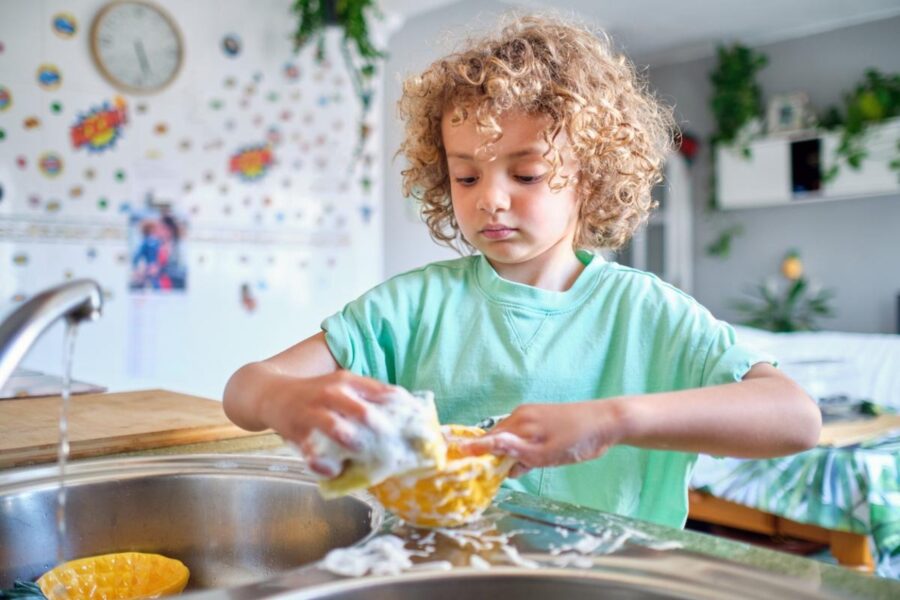
Kids love simple tasks like these. Start easy to build confidence.
Age-Appropriate Chores: Involving Kids from Toddler to Teen
Match tasks to age. This keeps it safe and fun.
Toddlers (Ages 2-4)
- Pick up toys
- Put clothes in hamper
- Help set table (napkins, spoons)
- Feed pet with help
- Dust low shelves
- Water plants with small can
They love copying you. Make it play.
Preschoolers (Ages 5-7)
- Make bed
- Sort laundry by color
- Help unpack groceries
- Sweep small areas
- Fold towels
- Wipe tables
Praise a lot. They want to please.
School-Age (Ages 8-10)
- Load/unload dishwasher
- Take out trash
- Vacuum rooms
- Help cook simple meals
- Rake leaves
- Clean their bathroom sink
They can do more alone.
Tweens (Ages 11-13)
- Wash dishes fully
- Do full laundry loads
- Clean full bathroom
- Mow lawn (with supervision)
- Babysit siblings short times
- Shop for small items
Build independence.
Teens (14+)
- Cook family meals
- Deep clean areas
- Manage recycling fully
- Help with car wash
- Plan grocery lists
They handle complex tasks.
This list comes from experts like the American Academy of Child and Adolescent Psychiatry.
Tools to Organize Household Chores
Use these to stay on track.
- Paper Charts: Free printables online. Colorful ones motivate kids.
- Apps: Shared lists with reminders.
- Whiteboards: Write weekly assignments.
- Jars: Draw random chores for fun.
- Timers: Race the clock.
Many families use household chores template printables. They are easy to start with.
Tips to Make Chores Fun, Fair, and Consistent
- Play Music: Dance while working.
- Work Together: Pair up sometimes.
- Choose Favorites: Let kids pick some tasks.
- Natural Rewards: Done chores mean screen time.
- Praise Often: Say “Great job!” specifically.
- Lead by Example: Do your chores cheerfully.
- Stay Consistent: Same rules every day.
- Be Patient: Learning takes time.
These make everyone want to help.
Overcoming Common Challenges
Many families face hurdles.
- Kids Forget: Use reminders or charts.
- Not Fair: Rotate tasks. Discuss in meetings.
- Too Much Resistance: Start small. Explain benefits.
- Busy Schedules: Short daily chores. Save big for weekends.
- Perfection Issues: Accept good effort, not perfect.
Flexibility helps. Adjust and keep going.
Real-Life Household Management Examples
One family uses zones. Each person owns a room weekly. Another rotates “chef” for dinners. A third has “chore hour” on Saturdays with music.
These show how systems work in real homes.
For ideas on family fun, try Sunday dinner recipes.
Frequently Asked Questions About Organizing Family Chores
Why Should Families Organize Chores?
Chores teach kids responsibility and how to care for a home. Children who help out often feel better about themselves and handle challenges well. Everyone works together, making the house run smoothly.
What Are Age-Appropriate Chores for Kids?
Pick tasks that match your child’s age. Start small and add more as they grow.
Here are simple ideas:
- Ages 2-3 (Toddlers): Put toys away, wipe spills, help set the table with napkins.
- Ages 4-5 (Preschoolers): Make their bed, feed pets, water plants, sort laundry by color.
- Ages 6-9 (School-Age): Sweep floors, load/unload dishwasher, take out trash, fold clothes.
- Ages 10-12: Vacuum, clean bathrooms, prepare simple meals, wash dishes.
- Ages 13+ (Teens): Mow lawn, do laundry fully, cook meals, babysit siblings.
Show them how first, then let them try with your help.
How Can I Make a Family Chore Chart?
A chore chart shows who does what and when. It keeps things fair and easy to track.
Try these steps:
- List all chores needed (daily, weekly, monthly).
- Assign based on age and likes.
- Use a board, printable, or app.
- Add check boxes or stickers for fun.
- Review weekly and switch tasks.
These colorful charts work great on the fridge.
Should Kids Get Paid Allowance for Chores?
Many parents debate this. Some pay to teach work equals money. Others say basic chores are part of family life, no pay needed.
A good mix: Give a small weekly allowance for learning money skills. Offer extra pay for bigger jobs. This way, kids contribute freely but can earn more.
What If Kids Don’t Want to Do Chores?
Kids may complain at first. Stay consistent and positive.
Helpful tips:
- Make it fun with music or timers.
- Praise effort: “Great job on that floor!”
- Do chores together as a family.
- Use natural results: No clean room? No playtime there.
- Avoid nagging—remind once, then follow through.
Most kids get used to it and feel proud.
How to Organize Family Chores Effectively: Your Path to a Peaceful Home
In conclusion, learning how to organize family chores effectively brings joy and calm. Use clear lists, fair assignments, and fun tools1. Involve kids early for big benefits like responsibility and confidence. Studies prove it leads to happier, successful lives. Start small today. Your family will thank you.
What is one chore change you will make this week2?