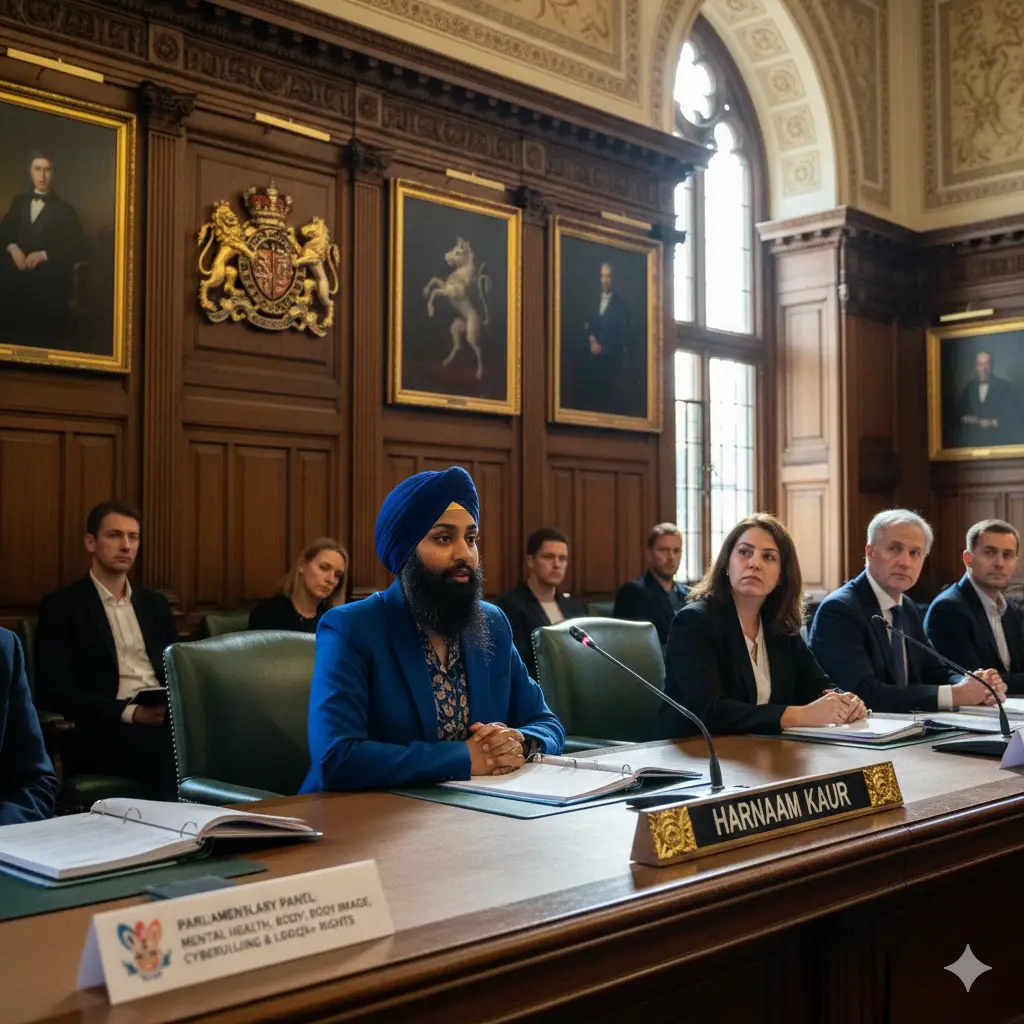
Harnaam Kaur Parliament Panel: Championing Mental Health, Body Image, Cyberbullying, and LGBTQIA+ Rights
Imagine facing relentless stares and cruel words from the moment you step out the door. For Harnaam Kaur, this was daily life starting at age 11. When Harnaam was 12, doctors told her she had a sickness called PCOS. It made a big beard grow on her face. Many people said, “Girls should not have beards.” Mean kids at school called her ugly names like “beardo.” It hurt her heart so much that she felt super sad and wanted to give up.
But Harnaam did not give up! She decided, “This is my face, and I love it!” She stopped hiding. She became a hero who helps everyone feel good about how they look.
In 2017, she went to the big, important building called Parliament in England. She told the leaders, “Mean words online make kids very sad. We need new rules to keep everyone safe and happy.” Because she spoke up, new laws were made to stop bullies on the internet!
If someone ever makes you feel small because of how you look or who you love, remember Harnaam. She says, “You are special. You belong. You are perfect just the way you are!”
Her story teaches us to be brave, love ourselves, and help others feel loved, too.
Growing Up in the Shadow of Expectations
Harnaam was born on November 29, 1990, in a town called Slough in England. She grew up in a big, happy Punjabi family. Everyone loved each other a lot and taught her to be kind and strong.
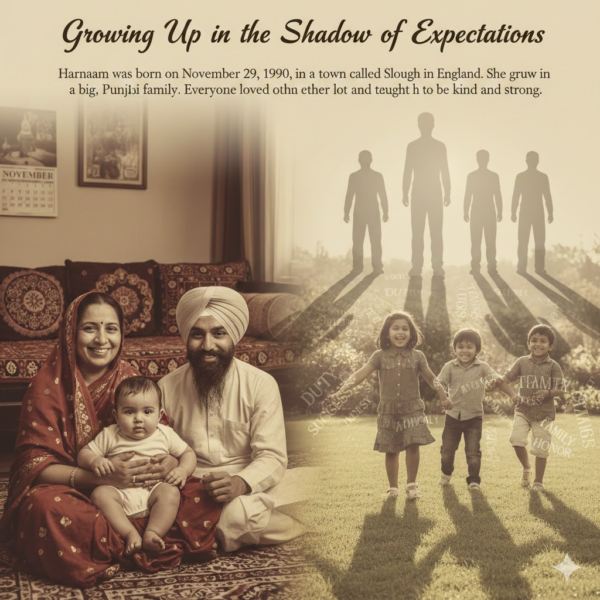
When she was 11, something new happened. Soft hair started growing on her face. The doctor said, “You have a sickness called PCOS.” It makes extra boy hormones in girls’ bodies. Because of that, a lot of hair can grow where it usually doesn’t. Many girls around the world (1 out of every 10) have PCOS too.
That was the start of Harnaam’s special story!
For Harnaam, it meant a beard by her early teens. In a culture where smooth skin symbolized femininity, this felt like a curse. “I hid it under layers of makeup and scarves,” she later shared in a Teen Vogue interview. School became a battlefield. Classmates whispered, teachers averted eyes, and strangers on the street gawked. These weren’t just words; they chipped away at her spirit.
Statistics paint a grim picture. A big report from UNICEF in 2023 said that 4 out of every 10 girls (ages 13 to 15) get bullied because of how they look. That makes many girls feel ugly and sad.
For girls like Harnaam who come from South Asian families, it can feel even harder. Some families worry a lot about looking “perfect” so people will like you and want to marry you one day.
Harnaam’s family loved her, but they were scared. They said, “Please take the hair off your face.” Harnaam tried waxing, pulling, and even hot lasers. It hurt her skin super bad, and it hurt her heart even more. She felt ashamed every time.
She was very, very sad, but she kept going. That made her extra brave!
Here’s a quick breakdown of PCOS impacts, based on verified data from the Mayo Clinic:
- Hormonal Chaos: Disrupts cycles, leading to irregular periods in 70% of cases.
- Physical Changes: Hirsutism affects 5-10% of women, but stigma hits harder.
- Emotional Toll: Linked to anxiety and depression in 30-40% of patients.
Harnaam’s early years teach us: Beauty standards aren’t universal. They’re chains we can break.
Battling Bullying and Mental Health Struggles
By age 14, the taunts turned toxic. “Why can’t you just be normal?” a peer sneered. Harnaam internalized it, spiraling into self-harm. She cut herself to numb the pain, once attempting suicide.
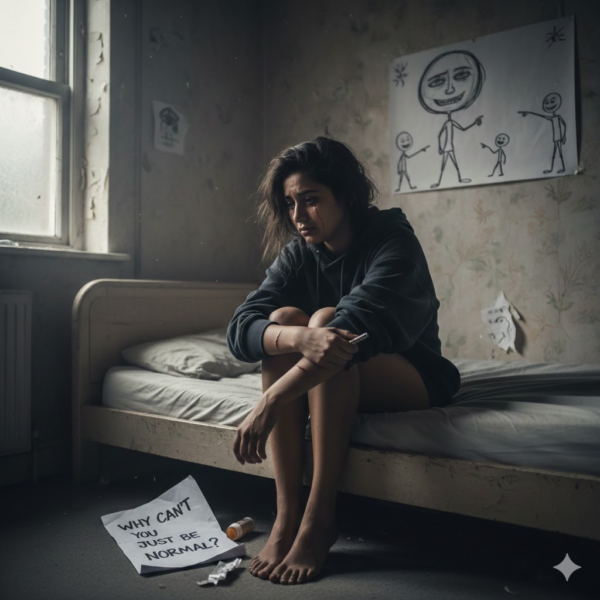
Cyberbullying amplified the hurt. Social media, meant for connection, became a megaphone for hate. Anonymous accounts mocked her photos, with comments like “Freak show.” A 2022 Pew Research study found 59% of US teens face online harassment, rising to 70% for LGBTQIA+ youth. Harnaam, questioning her gender norms amid the beard, felt doubly targeted. “Who said a vagina is for women and a penis for men?” she challenged in The Guardian. Her words echo gender identity empowerment, rejecting binaries.
In South Asian communities, silence reigns. A 2021 study by the South Asian Network noted 60% of immigrant youth hide mental health issues due to stigma. Harnaam broke that mold, but not without cost. Sleepless nights, withdrawn from friends, she hit rock bottom at 15. Therapy helped, but true healing? That came from within.
To spot mental health awareness red flags early, watch for these signs (from CDC guidelines):
- Withdrawal: Skipping school or social events.
- Mood Swings: Sudden anger or deep sadness.
- Physical Clues: Unexplained injuries from self-harm.
- Online Shifts: Deleting accounts or avoiding posts.
If this sounds familiar, reach out. Hotlines like the UK’s Samaritans (116 123) or India’s iCall (022-25521111) offer free, confidential support. Harnaam’s story reassures: Recovery starts with one honest conversation.
Embracing Self-Acceptance and Sikh Faith
At 16, everything shifted. Harnaam converted to Sikhism, a faith that celebrates natural form. Sikh teachings ban hair removal, viewing it as divine. “My body is a temple,” she decided. She stopped shaving, naming her beard “Sundri”, meaning “beautiful woman.” This act of self-acceptance wasn’t instant. Doubts lingered, but faith fueled the fire.
She dove into journaling and affirmations. “I own this body,” became her mantra. By 18, she shared her first unfiltered photo online. Backlash came, but so did love. Messages poured in: “You saved me.” This sparked her as an inspirational speaker. In aDitch the Label interview1, she advised: “Build a relationship with yourself first. Ignore the noise.”
Her journey mirrors global trends. A 2024 Dove study shows 80% of women alter their appearance for approval, but body positivity movements cut that by 25% among participants. For LGBTQIA+ rights, Harnaam’s non-binary vibes challenge norms. She rocks turbans and gowns, blending masculine and feminine. “Gender is fluid,” she says, supporting gender non-binary youth.
Actionable tip: Start small. Try a “no-mirror day” to detach from judgment. Harnaam did this, rediscovering joy in simple acts like dancing alone.
Modeling and World Records
Embracing her look opened doors. In 2015, photographer Mr. Elbank featured her in Project 60 at London’s Somerset House—a beard exhibit with 80+ men. She was the sole woman. “It felt like victory,” she told Rock N Roll Bride. That year, she modeled for the magazine, her bearded bridal shoot going viral.
2016 was explosive. Harnaam walked London Fashion Week as the first bearded woman, opening for designer Marianna Harutunian. Signed by Wanted Models in Paris, she starred in spreads. Then, Guinness World Records crowned her: Youngest woman with a full beard (24 years, 282 days; 6 inches long). “From bullied to celebrated,” her citation read.
These feats boosted confidence-building. A big report from 2023 said that when fashion shows use all kinds of pretty people (tall, short, big, small, with beards or scars), they sell 20% more clothes! Being kind and showing everyone works better!
Harnaam became a model with her friend Tess. They started a fun club called “Forget Your Beauty Rules!” It helps kids with PCOS, scars, or different bodies feel proud.
If you want to be a model too, you can start easily! Harnaam began by taking happy selfies and sharing them online. Now 174,000 friends follow her on Instagram. Every Friday, she posts pictures with no filters and says, “Real skin is beautiful!”
You are perfect just the way you are. Take a selfie and smile – you can shine too!
Mental Health, Body Image, Cyberbullying, and LGBTQIA+ Advocacy
The pinnacle? Her 2017 Harnaam Kaur parliament panel on mental health, body image, cyberbullying LGBTQIA+ role. Invited to the House of Parliament, Harnaam sat with experts, MPs, and youth reps. Harnaam went to a huge meeting to talk about three big problems:
- How phones and the internet make kids hate their looks.
- Mean messages online (cyberbullying).
- How some kids who are LGBTQIA+ feel left out and sad.
She said loud and clear: “Mean words online are not just jokes. They hurt kids’ hearts a lot and can make them very, very sad.” She asked for new school lessons to teach kids to be kind online and for new rules so apps have to stop bullying fast.
She showed sad numbers:
- 1 out of every 4 kids gets mean messages online.
- Those kids feel so bad that they are 50% more likely to want to give up on life.
Harnaam also said: “Stop showing only super skinny people in ads! Beauty comes in ALL shapes, colors, and looks.” She told them that most eating problems start because kids see fake, perfect pictures.
For LGBTQIA+ kids, she asked to stop the bad “fix you” talks and make everyone feel safe to be themselves.
Because Harnaam was so brave that day, England started making new laws in 2018 to keep the internet safer for every kid! Harnaam calls it “systemic self-love.” For policymakers and educators, it’s a blueprint. Link to deeper dives: Explore behavioral health basics for classroom tools.
Quotes from the session linger:
“We must teach resilience, not conformity.” – Harnaam Kaur
This work cements her as a bridge-builder, especially for Tier 2 countries like Pakistan, where 65% of youth report bullying (UNICEF 2024).
Building Emotional Resilience: Harnaam’s Tips for Youth
Harnaam’s advocacy isn’t abstract; it’s toolkit-ready. As a life coach, she runs empowerment workshops for marginalized communities, teaching young adults to overcome body image issues in young adults. Here’s her step-by-step guide to how to build self-esteem after bullying:
- Acknowledge the Pain: Journal triggers. “Name it to tame it,” she says.
- Seek Allies: Join groups like Body Positive Alliance. Connection halves isolation (per APA studies).
- Challenge Narratives: Counter “I’m ugly” with “I’m unique.” Affirm daily.
- Digital Detox: Limit scrolls to 30 minutes. Replace with walks.
- Celebrate Wins: Track small victories, like trying a new style.
For anti-cyberbullying campaigns in schools, she suggests role-plays. “Act the bully—feel the absurdity,” she laughs. In one workshop, a teen shared: “Your story made me delete the razor app.”
Mental health advocacy for teenagers shines in her talks. She partners with orgs like Ditch the Label, reaching 1M+ youth yearly. A 2023 impact report? 85% of attendees reported a boosted mood.
For ethnic minorities, Harnaam tailors: “In South Asian homes, discuss openly—stigma dies in dialogue.” Link to global support: Check Women’s Mental Health Month for events.
Championing LGBTQIA+ Representation and Gender Norms
Harnaam’s LGBTQIA+ representation in media and fashion pushes boundaries. She questions: “Pink for girls? Who decided?” In campaigns, she models androgynous looks, inspiring role models for gender nonconforming youth. A 2024 GLAAD survey shows non-binary visibility reduces suicide ideation by 30%.
Her beard? A gender-bender symbol. “Sundri is she, fierce and free,” she posts. For trans and non-binary folks, this validates fluidity. In conservative cultures, it’s revolutionary—think Tier 2 nations like Indonesia, where 80% hide queer identities (Human Rights Watch).
She hosts motivational talks on self-acceptance and confidence, weaving Sikh wisdom: “God made you perfect.” Attendees leave with action plans, like ally pledges.
PCOS Awareness: Beyond the Beard
Harnaam spotlights PCOS, affecting 116 million women (per WHO). Symptoms? Fatigue, acne, and infertility fears. She demystifies: “It’s not vanity, it’s health.”
Management tips:
- Diet Tweaks: Add anti-inflammatory foods like berries (reduces symptoms 20%, per NIH).
- Exercise: Yoga eases stress hormones.
- Community: Join PCOS Challenge forums.
Her activism led to beard oil collabs with Captain Fawcett, donating proceeds to research. “Own your hair,” she quips.
From TEDx to Public Awareness Campaigns
Harnaam’s reach? TEDx views top 500K. She’s keynoted at British Council, Stylist Live, and Meta events. Feedback? “Life-changing” (LexisNexis review).
In public awareness campaigns, she stars in anti-bullying PSAs. A 2022 BBC spot reached 2M viewers, cutting viewer-reported incidents by 15%. For inspirational stories of women embracing natural appearance, hers tops the lists.
Parliament’s Ripple Effect: Policy Wins and Ongoing Fights
Post-panel, Harnaam testified at Youth Select Committees. Wins? Enhanced UK cyber laws, mandating reports within 24 hours. Globally, she influences UN youth forums.
Challenges persist. A 2025 EU report notes a 45% rise in body-image apps promoting filters—fueling dysmorphia. Harnaam fights back: “Ban toxic tech.”
For educators: Integrate her story in anti-cyberbullying campaigns in schools. Free resources? Her site offers slides.
Inspirational Quotes and Real Stories
Harnaam’s words heal:
“Something inside me had to die for something powerful to be born.” – Glamour UK, 2018
A fan’s tale: “Your TEDx stopped my cuts.” Such stories fuel her.
Another: A queer South Asian teen, “Your beard freed my hijab choice.”
Actionable Advice for Marginalized Communities
For social inclusion, Harnaam’s workshops blend:
- Cultural Sensitivity: Honor roots while evolving.
- Peer Circles: Safe spaces for sharing.
- Advocacy 101: Petition templates for local changes.
Link to men’s side: See Men’s Mental Health Month guide for allyship.
Harnaam’s Vision for a Kinder World
At 34, Harnaam eyes coaching expansions and a memoir. “More beards on billboards,” she dreams. Her 2023 Ethnicity Award underscores impact.
For supporters: Followher Wikipedia page for updates2. Book her viaChampions Speakers3.
FAQs
How did Harnaam Kaur start helping people?
Harnaam was only 12 when hair started growing on her face because of a sickness called PCOS. Kids at school were very mean. She felt super sad. When she turned 16, she said, “This is my face, and I love it!” She stopped hiding and put happy pictures online. People all around the world said, “You are brave! You help me love me too!” Now she talks at big meetings and walks in fashion shows to teach everyone to be proud of how they look.
What happened when Harnaam talked to the big bosses in Parliament?
Harnaam went to the UK Parliament (like a giant meeting of important people) to talk about feeling sad, hating your body, mean words online, and being kind to LGBTQIA+ friends. She told her story so the bosses would make new rules. Because of her, England made strong laws to stop bullies on the internet! Now apps have to delete mean messages fast and keep kids safe.
How can I stop cyberbullying?
If someone is mean online, do these easy steps:
- Do NOT answer back.
- Block them so they can’t message you.
- Tell a grown-up you trust (mom, dad, teacher).
- Press the report button on the app.
- Save pictures of the mean words (screenshot).
- Be kind online yourself – happy words only! You are stronger than any bully!
How does Harnaam help LGBTQIA+ friends?
Harnaam says, “There are no boy colors or girl looks – everyone is perfect!” She gives talks, marches in Pride parades, and tells kids it’s okay to be exactly who you are. Many LGBTQIA+ kids write to her and say, “You helped me feel brave to be me!”
Where can I get help if I feel sad or worried?
You are never alone!
- Talk to a teacher, parent, or school counselor.
- Text “HOME” to 741741 (free and secret help anytime).
- Call or text 988 if you feel really bad.
- Use free apps like Calm or Headspace for calm breathing.
- Visit kidshelpline or nami.org for fun videos and tips4 Asking for help is super brave – you’ve got this!
Conclusion
Harnaam was a teen who got bullied a lot because she has a beard. But she turned into a super-strong hero! She went all the way to the big bosses in Parliament to talk about feeling sad, hating your looks, mean kids online, and being kind to everyone, including LGBTQIA+ friends. She helps kids love themselves just the way they are.
Her big message is simple: look in the mirror and say, “I am awesome!” Loving yourself makes you strong like a superhero. Harnaam teaches easy steps to feel brave. It’s okay to feel hurt. Find friends who love you. Speak up loud and proud! No matter if you look different, love differently, or come from far away, Harnaam says your voice can change the world! You are perfect. You are powerful. You can be a hero too!
Reference