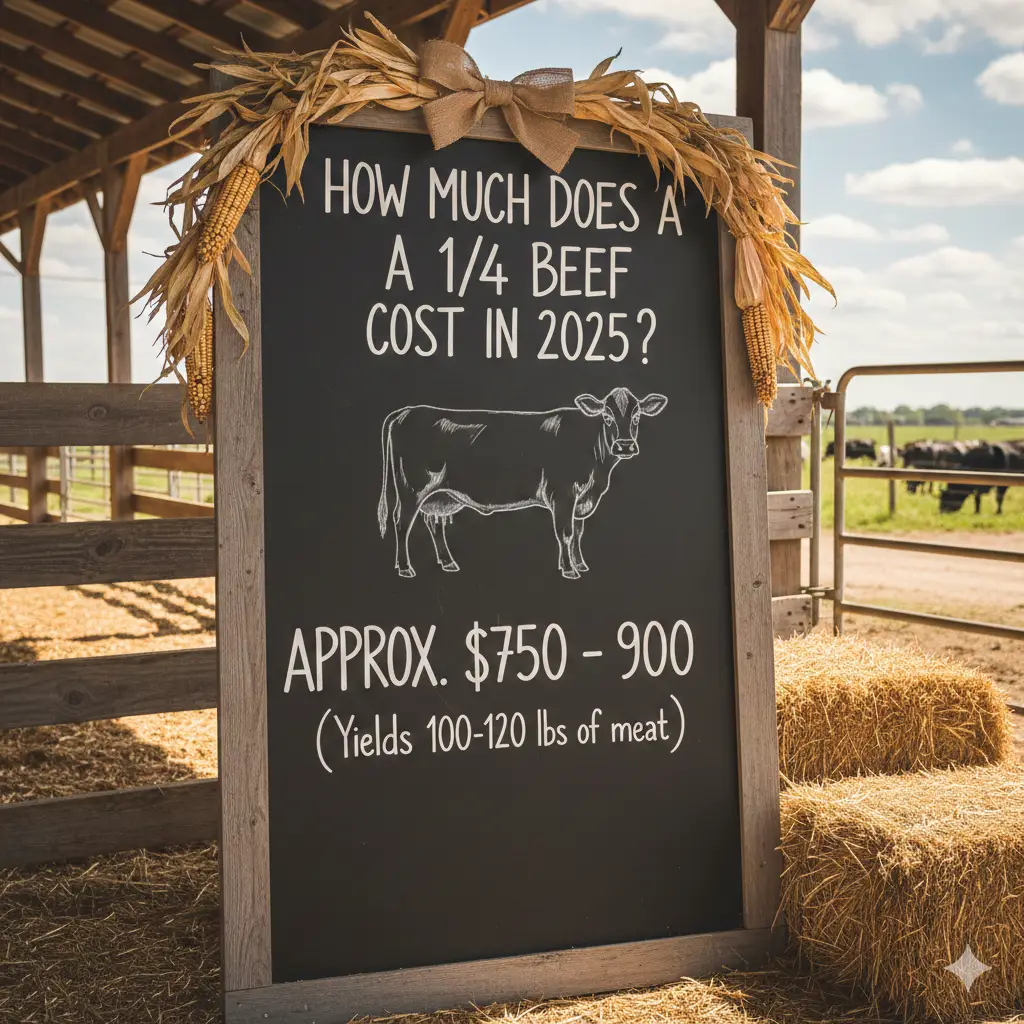
How Much Does A 1/4 Beef Cost in 2025?
Many people want to know How Much Does A 1/4 Beef Cost because buying in bulk saves cash and gives fresh meat. In places like the USA and Canada, prices change based on where you live and the type of beef. This guide helps families and first-time buyers understand the 1/4 beef price. We look at average costs, what you get, and why it’s a smart choice. Farms sell grass-fed options that taste great and are good for health. Keep reading to see if this fits your budget and freezer space. We base this on real farm data and market trends.

What Is 1/4 Beef and Why Buy It?
A 1/4 beef means you buy one quarter of a cow, cut into steaks, roasts, and ground meat. This bulk buy suits families in the USA or Canada who cook at home a lot. You get about 100 to 150 pounds of meat to store in your freezer. People choose this for the fresh taste and no store markups. Grass-fed types come from farms where cows eat only grass, making the meat lean and full of nutrients. First-time buyers often ask about the process, like how the butcher cuts it. Farms handle the hard parts, so you just pick your cuts. This way, you control quality and support local farmers. Many say it cuts their meat bill by half compared to shops. In places like the United States or Canada, rules ensure safe handling. You pay based on the cow’s weight before cuts, called hanging weight. Take-home weight is less after trimming. This option works well for meal planners who freeze portions. It helps avoid high store prices during holidays. Families with kids find it easy to make quick meals from ground beef. Overall, it’s a simple way to stock up on good food.
Factors That Affect the Cost of a Quarter Beef
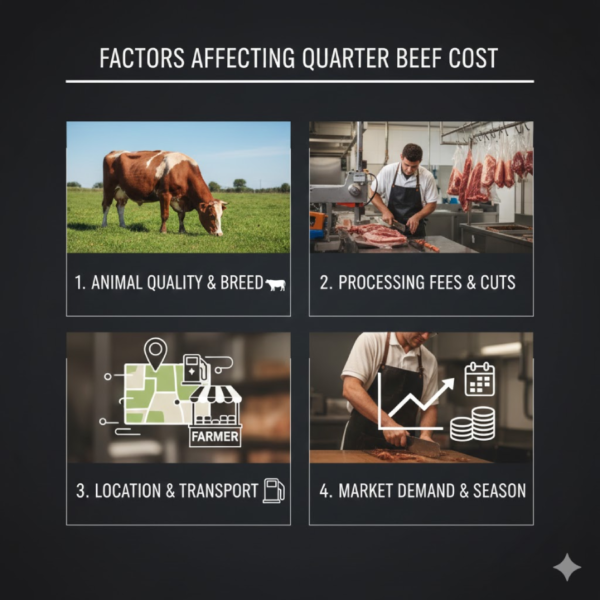
Prices for quarter cow cost vary due to many things in 2025. Feed costs rise with droughts in the USA and Canada, pushing up beef prices. Farms face higher bills for grass or grain, so they charge more. Location matters too, as shipping from rural areas adds fees. Grass-fed beef costs extra because cows take longer to grow on natural diets. Market demand stays high, but fewer cows mean tight supply. Economic issues like inflation make everything pricier for buyers. Butcher fees include cutting and wrapping, often $1 to $2 per pound. Hanging weight sets the base price, usually $6 to $12 per pound. Take-home yield drops 40% due to bones and fat removal. Seasons affect costs, with fall harvests sometimes cheaper. Local rules in states like Texas or provinces like Alberta influence taxes. Buyers in cities pay more for delivery than rural folks. Quality labels like organic add to the how much is a quarter cow tag. Trends show prices up 10% from last year due to weather woes. Understanding these helps you budget smartly.
Average 1/4 Beef Price in the USA
In the USA, the 1/4 beef price averages $1,200 to $1,800 in 2025. This covers hanging weights of 150 to 250 pounds at $6 to $8 per pound. Farms in states like Washington offer deals around $1,420 to $1,600 total. Processing is often included, saving you $200 or more. Grass-fed options hit higher, near $1,800 for better taste. Market reports from USDA show supply down, driving costs up. Families get about 100 pounds take-home, making it $12 to $18 per pound final. Compared to stores, where steaks cost $15 each, this saves big. Droughts in the Midwest raise feed prices, affecting farms. Buyers in California or New York pay extra for shipping. Local co-ops sometimes lower the price of 1/4 cow beef. Stats say beef inflation is 8% this year. First-timers should check farm sites for exact quotes. This price gives variety like ribeyes and ground beef. It’s a good deal for households planning meals ahead.
Average Quarter Beef Pricing in Canada
Canada sees quarter beef pricing from $1,700 to $2,200 CAD in 2025. Hanging weight prices sit at $10 to $12 per pound for 150 pounds. Farms in British Columbia list around $1,725 to $2,012 total. This includes cutting but extras like sausage add $2 per pound. Drought in prairies pushes costs higher, per farm reports. Take-home meat yields 80 to 100 pounds, worth the spend. Compared to grocery beef at $20 per pound for steaks, it’s cheaper. Economic factors like high interest rates squeeze farmers. Buyers in Ontario or Alberta find local deals easier. Grass-only beef appeals to health fans for its nutrients. Market outlooks predict steady rises into 2026. Families stock freezers with this for winter meals. Check for deposits, often $100 to hold your share. This setup helps support Canadian agriculture directly.

How Much Meat Do You Get from a 1/4 Beef?
From a 1/4 beef, you get 100 to 150 pounds of usable meat. Hanging weight starts at 200 pounds, but trimming cuts it down. You receive steaks like ribeye, T-bone, and sirloin. Roasts include chuck and round for slow cooking. Ground beef makes up 40% for burgers and tacos. Short ribs and stew meat add variety for soups. Organs like liver come if you want them. Freezer space needs 4 cubic feet for all this. Farms let you choose cuts to fit your family. In the USA, yields are higher due to bigger cows. Canadian options focus on grass-fed for leaner meat. This amount feeds a family of four for months. It beats store buying by giving fresh, custom portions. Many buyers freeze in bags for easy use. Overall, it’s plenty for daily meals and parties.
Is Buying a Quarter Beef Worth the Cost?
Yes, buying a quarter beef pricing is worth it for most families. You save 30% to 50% over store prices long-term. Fresh taste and no additives make meals better. Grass-fed types boost health with omega-3s. First-timers learn quickly with farm guides. Freezer planning keeps food ready anytime. In 2025, with high beef costs, bulk buys lock in prices. Households avoid weekly shopping trips. Ethical farming supports local jobs too. Compare 1/4 beef average price to retail: $7 per pound vs $15. Processing ensures safe, labeled packs. Many say it pays off in six months. For frugal folks, it’s a budget win. Community groups share tips on using all cuts. This choice reassures you with quality control.
Grass-Fed Beef Prices vs Regular
Grass-fed beef prices run $1 to $3 more per pound than regular. In the USA, expect $8 to $10 for hanging weight. Canada hits $11 to $13 due to natural raising. Grass types taste richer and have less fat. Regular beef uses grain for faster growth, lowering costs. Health fans pick grass for no hormones. Farms like those in Washington charge $7.10 total per pound. Canadian sites add value with custom cuts. Market trends show grass demand up 15%. Ethical buyers like the pasture life for cows. Prices include processing for both. Families find grass worth extra for nutrition. In 2025, supply issues affect both but grass more. This choice fits wellness goals nicely.
Butcher Processing Fees and Extra Costs
Butcher processing fees add $150 to $300 to your total. This covers cutting, wrapping, and labeling. Some farms include it in the buying of a quarter beef cost. Extras like sausage cost $2 to $3 per pound. Delivery might be free or $50 to $100. Deposits secure your share, around $100 to $200. Taxes apply based on your state or province. Hanging vs take-home weight confuses some, but farms explain. In the USA, fees are lower in rural areas. Canadian butchers charge for smoking options. Plan for these to avoid surprises. Many buyers budget $1,500 overall. This ensures you get ready-to-cook meat. Reassuringly, it’s all handled professionally.
Freezer Space for Quarter Beef
You need 3 to 5 cubic feet for freezer space for quarter beef. This holds 100 pounds easily in bags. Chest freezers work best for bulk. Organize by cut type for quick access. Families buy extra freezers for $200. In apartments, upright models fit small spaces. Vacuum sealing keeps meat fresh for up to a year. Farms suggest stacking methods. In cold climates like Canada, garages hold freezers. This setup saves trips to stores. Many start with smaller shares to test space. It’s simple once planned. Reassures you won’t waste any meat.
How to Buy a 1/4 Beef Step by Step
- Research Farms: Look for local ones in the USA or Canada offering 1/4 beef.
- Check Prices: Compare How Much Does A 1/4 Beef Cost on sites.
- Pay Deposit: Secure with $100 to $200.
- Choose Cuts: Fill forms for steaks and roasts.
- Wait for Processing: Takes 2 to 4 weeks.
- Pick Up or Deliver: Get your meat home.
- Store Properly: Freeze right away.This process is easy and farms guide you.
Bulk Beef Pricing Tips for Savings
To save on bulk beef pricing, buy in fall when prices dip. Join co-ops for group deals. Pick up yourself to cut shipping. Choose regular over grass if the budget tight. Compare cost per pound of quarter beef online. Ask for sales on farm sites. Share with friends to split costs. In 2025, watch market reports for lows. This way, you get value. Many save $500 yearly. Reassuring for cost-conscious buyers.
FAQ: Common Questions About 1/4 Beef Costs
How Much Does A 1/4 Beef Cost Per Pound?
The How Much Does A 1/4 Beef Cost per pound is $6 to $12 on hanging weight. After processing, take-home cost hits $12 to $20 per pound. Farms base it on cow size and type. Grass-fed adds to the price for quality. In the USA, it averages $7, while Canada sees $11. This includes cuts like steaks. Buyers find it cheaper than stores long-term. Market factors like drought raise it in 2025. Plan your budget with these ranges.
How Much Freezer Space Does a Quarter Beef Need?
A quarter beef needs 3 to 5 cubic feet in your freezer. This space holds 100 pounds of wrapped meat. Chest freezers are ideal for bulk storage. Organize packs by type for easy meals. Families often buy dedicated freezers. In small homes, upright ones work well. Proper sealing keeps it fresh. This setup fits suburban lifestyles in Tier 1 countries.
Is Buying a Quarter Beef Worth the Cost?
Yes, buying a quarter beef cost is worth it for savings and quality. You cut meat bills by 40% over time. Fresh cuts taste better than store ones. Grass-fed options boost health benefits. First-timers learn from farm tips. It suits families planning ahead. In high-cost years like 2025, it locks in prices. Many say it’s a smart investment.
Average Price of a Quarter Cow Grass Fed
The average price of a quarter cow grass fed is $1,500 to $2,000. This covers 150 pounds hanging weight at $8 to $12 per pound. Farms in Canada charge more for natural raising. USA options start lower around $1,400. Includes processing and custom cuts. Health perks make it popular1. Trends show rising demand. Buyers value the ethical side.
How Much Meat Do You Get from a 1/4 Beef?
You get 100 to 150 pounds from a 1/4 beef. This includes 20% steaks, 30% roasts, and 40% ground. Hanging weight loses 40% in trimming. Farms provide lists of cuts. Suits a family of four for 3 to 6 months. Variety helps with recipes. In 2025, yields are steady. It’s plenty for daily use.
Quarter Beef Cost Including Processing
Quarter beef cost including processing totals $1,200 to $2,200. Processing adds $200 but is often bundled. USA farms like Walking T include it at $7 per pound. Canada sites add extras. Covers cutting and wrapping. Buyers pay a deposit first. This all-in price simplifies budgeting. Reassures quality handling.
Cheapest Way to Buy a Quarter Cow
The cheapest way to buy a quarter cow is direct from local farms. Skip middlemen for lower quarter cow cost. Pick up to avoid shipping fees. Buy in groups to share. Look for fall sales. Regular beef over grass saves cash. Check co-ops in the USA or Canada. This cuts costs by 20%.
Quarter Beef Price Comparison vs Grocery Store
Quarter beef price beats grocery by $5 to $10 per pound. Bulk at $7 hanging vs store $15 for steaks. You get custom cuts fresh. Families save $600 yearly. Grass-fed is still cheaper than organic stores. In 2025, inflation makes bulk smarter. Stats show value in the long run. It’s a clear win.
How Much Does a 1/4 Cow Cost in 2025
How much does a 1/4 cow cost in 2025 averages $1,400 to $2,000. USA prices start at $1,420, Canada at $1,725. Factors like drought raise it. Includes 100 pounds of meat. Grass-fed adds $200. Market outlooks predict highs. Buyers plan ahead for deals. This fits Tier 1 budgets.
Local Farm Quarter Beef Prices Near Me
Local farm quarter beef prices near me vary by area. In Washington, around $1,500. British Columbia lists $1,800. Search farms for quotes. Grass-fed options are common. Deposits secure spots. Delivery or pickup available. Community groups share tips. This supports nearby agriculture.
Conclusion: Making the Right Choice on How Much Does A 1/4 Beef Cost
In summary, How Much Does A 1/4 Beef Cost range from $1,200 to $2,200 in 2025, depending on location and type. You get great value with bulk meat for months. Factors like supply and feed affect prices, but savings beat stores. Grass-fed choices offer health perks at a fair cost. First-timers find it easy with farm help. This buy suits families in the USA and Canada for meal planning. It’s reassuring to know you control quality and budget2. What are your thoughts on trying a 1/4 beef share?
References
- Mount Lehman Farm – Canadian grass-fed options for enthusiasts wanting ethical, high-quality beef. ↩︎
- Walking T Beef Farm – Details on USA pricing and cuts for household buyers seeking bulk savings. ↩︎