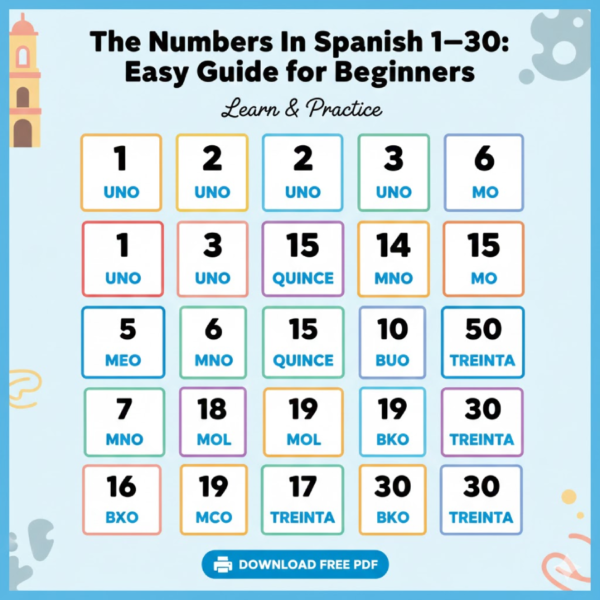
The Numbers In Spanish 1–30: Easy Guide for Beginners
Learning The Numbers In Spanish 1–30 is one of the first steps when you start Spanish. These basic words help you count, tell your age, say the date, shop, and talk about time. Numbers 1 to 10 are simple and unique. From 11 to 15, they have their own names too. Then 16 to 19 follow a pattern with “dieci.” Twenty to thirty use “veinte” and “treinta” with connectors. This guide gives a clear Spanish numbers list 1–30 with easy pronunciation. You will also find tips to practice and remember them fast. Perfect for kids, students, or anyone new to Spanish. Start counting today and feel more confident!
Full List of Numbers 1–30 in Spanish
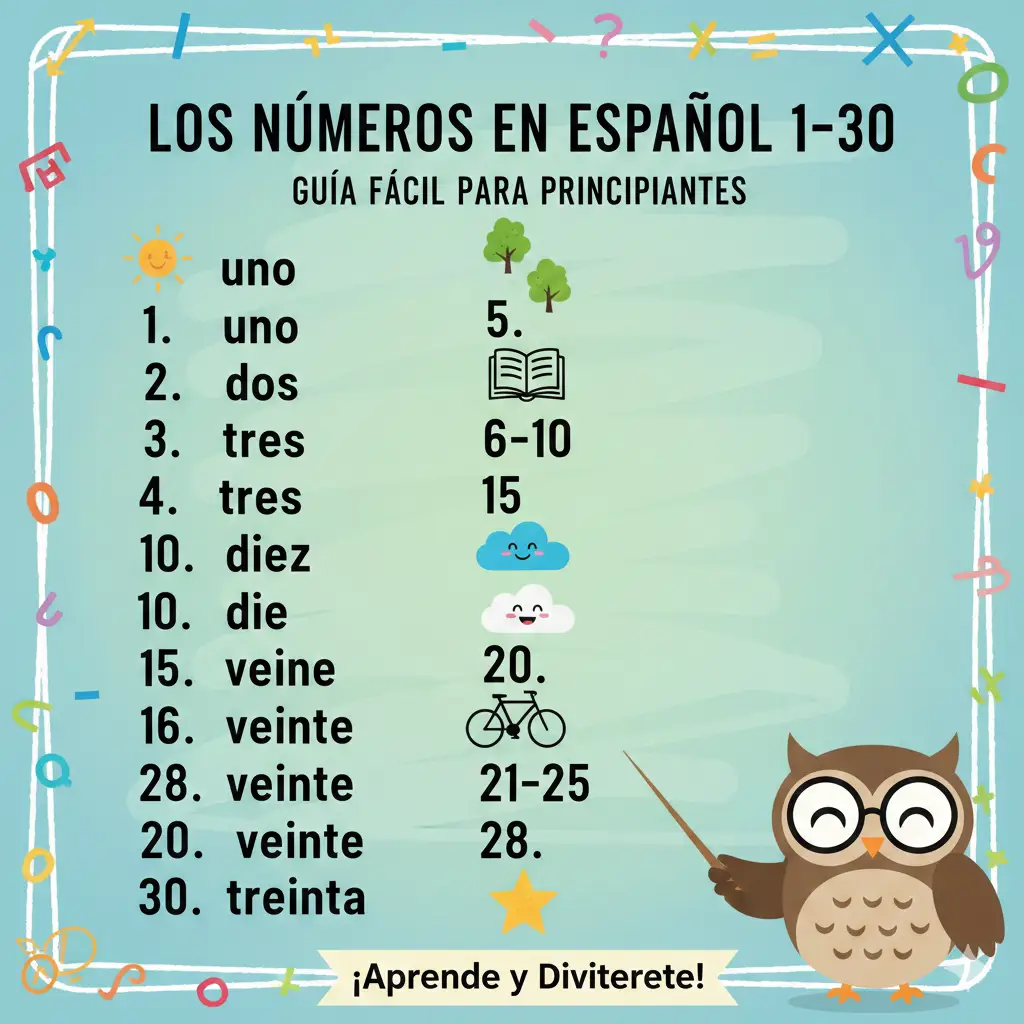
Here are the complete numbers 1–30 in the Spanish list. Read them out loud to practice.
- uno
- dos
- tres
- cuatro
- cinco
- seis
- siete
- ocho
- nueve
- diez
- once
- doce
- trece
- catorce
- quince
- dieciséis
- diecisiete
- dieciocho
- diecinueve
- veinte
- veintiuno
- veintidós
- veintitrés
- veinticuatro
- veinticinco
- veintiséis
- veintisiete
- veintiocho
- veintinueve
- treintaThis Spanish numbers 1–30 list is easy to save or print. Use it every day to learn fast.
Easy Pronunciation Tips for Spanish Numbers 1–30
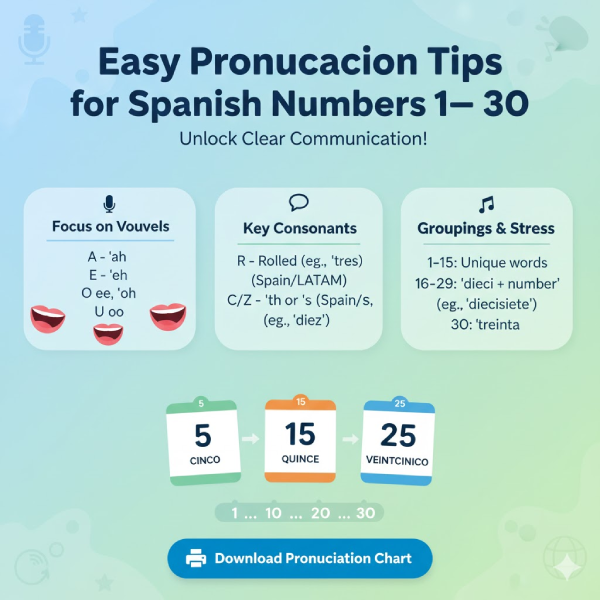
Good pronunciation makes learning Spanish numbers 1–30 fun and clear. Spanish sounds are steady. Stress the right syllable.
- Uno (OO-noh) – like “ooh-no”.
- Dos (dohs) – short “o”.
- Tres (trehs) – roll the “r” a little.
- Cuatro (KWAH-troh) – strong “kwah”.
- Cinco (SEEN-koh) – “seen” like you’ve seen a movie.
- Seis (says) – like “says”.
- Siete (SYEH-teh) – “yeh” like yes.
- Ocho (OH-choh) – soft “ch” like chocolate.
- Nueve (NWEH-veh) – start with “nw”.
- Diez (dyehs) – like “yes” with “d”.For 11–15: once (OHN-seh), doce (DOH-seh), trece (TREH-seh), catorce (kah-TOR-seh), quince (KEEN-seh).16–19 add “dieci” first: dieciséis (dyeh-see-SAYS).20s use “veinti” together: veintiuno (beyn-tee-OO-noh).Treinta (TRAYN-tah) for 30.Practice slow then fast. Listen to native speakers online for the best sound.
Patterns to Remember Numbers Faster
Spanish numbers have patterns that make counting 1–30 in Spanish easy to remember. 1 to 10 are special words you learn by heart. 11 to 15 are also special but short. From 16 to 19, add “dieci” plus the unit: dieci + seis = dieciséis. No space in writing.For 20s, “veinte” joins the unit with “i”: veinte + uno = veintiuno1. Same for others up to veintinueve. At 30, it is just “treinta”. These rules help you guess new numbers. Practice saying them in order every day. Soon you know the whole basic Spanish numbers 1–30 without looking.
Fun Ways to Practice Spanish Numbers 1–30
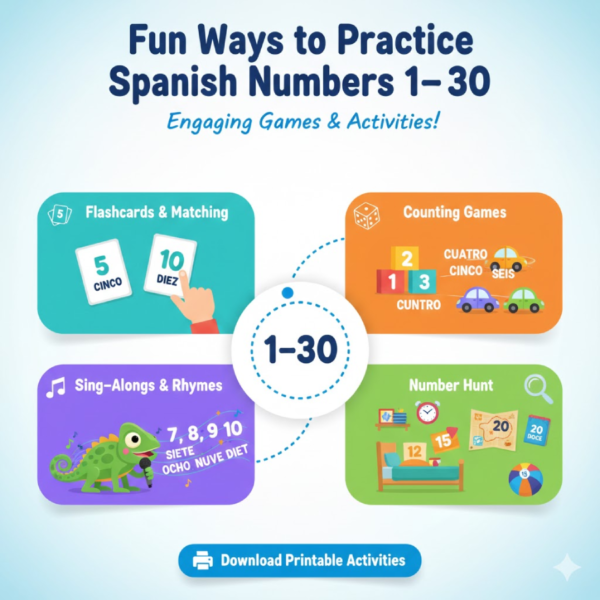
Make practice fun for learning Spanish numbers 1–30. Count objects around you: books, toys, steps. Play games like bingo with numbers. Use flashcards – write English on one side, Spanish on the other. Sing counting songs in Spanish. Watch short videos that repeat numbers. Say your phone number or birthday in Spanish. For kids, draw pictures and label with numbers. Do simple math: dos + tres = cinco. These activities help memory stick. Practice 10 minutes daily. You will see big improvement in Spanish counting 1–30.
Common Uses of Numbers 1–30 in Daily Spanish
You use The Numbers In Spanish 1–30 a lot in real life. Tell your age: “Tengo veinte años” (I am twenty years old). Say dates: “Es el quince de mayo” (It is May fifteenth). Talk time: “Son las tres” (It is three o’clock). Shop prices: “Cuesta diez euros” (It costs ten euros). Ask quantities: “¿Cuántos?” (How many?). Count people or items. These basics open many talks. Learning them early makes Spanish feel useful fast.
Tips for Kids Learning Spanish Numbers 1–30
Kids love Spanish numbers 1–30 for beginners. Use colors and pictures. Make big posters with numbers and drawings. Play hopscotch and say numbers when jumping. Count snacks or toys together. Watch fun cartoons that teach counting. Reward with stickers for saying right. Keep sessions short and happy. Repeat often but with games. This builds love for Spanish.
FAQ
How do you count from 1 to 30 in Spanish?
To count The Numbers In Spanish 1–30, start with uno to diez. Then once to quince. Next dieciséis to diecinueve. Then veinte to veintinueve with “veinti”. End with treinta. Practice the list daily. Say them out loud. Use patterns like “dieci” and “veinti”. This makes counting 1–30 in Spanish simple and quick.
What are the Spanish numbers 1–30 with pronunciation?
The Spanish numbers 1–30 pronunciation starts easy: uno (OO-no), dos (dohs), tres (trehs). Up to diez (dyehs). Then once (OHN-seh), doce (DOH-seh). Quince (KEEN-seh). Dieciséis (dyeh-see-SAYS). Veintiuno (beyn-tee-OO-no). Treinta (TRAYN-tah). Listen and repeat for the best sound.
How can beginners learn Spanish numbers 1–30 fast?
Beginners learn Spanish numbers 1–30 fast with daily practice. Use lists and flashcards. Count things around you. Play games and sing songs2. Watch videos with audio. Repeat patterns like 16–19 and 20s. Keep it fun and short.
Are Spanish numbers 1–30 different for boys and girls?
No, Spanish numbers 1–30 stay the same for all. Only “uno” changes to “una” before girl nouns, like una manzana (one apple). Numbers alone do not change.
Why learn numbers 1–30 first in Spanish?
Learn basic Spanish numbers 1–30 first because they help daily talk3. Age, time, dates, shopping all use them. They build confidence fast for beginners.
Conclusion
Mastering The Numbers In Spanish 1–30 opens the door to easy Spanish talks. Use the list, practice pronunciation, and play games daily. Patterns make remembering simple. Soon you count without thinking. Keep going and have fun. How will you practice your Spanish numbers today?
References
- Interactive flashcards and diagrams for practice at Quizlet Spanish numbers 1–30. ↩︎
- Beginner lessons and exercises from Busuu Spanish numbers. ↩︎
- Clear explanations and rules from don Quijote Spanish numbers guide. ↩︎